Benefits
- Strong bonding to LSE plastics
- Can simplify assembly by reducing primer requirements
- Provides reliable permanent mounting
- Helps compensate for minor surface irregularities
- Acrylic foam core helps distribute stress across the bonded area
- Absorbs and dissipates dynamic and static loads
- Suitable for bonding plastic components without mechanical fasteners
- Supports clean and visually attractive product designs
- Available in multiple thicknesses for different mounting requirements
- Suitable for custom slitting and converting applications
Technical Specifications
| Property | Tesa 6311 New Bond |
|---|---|
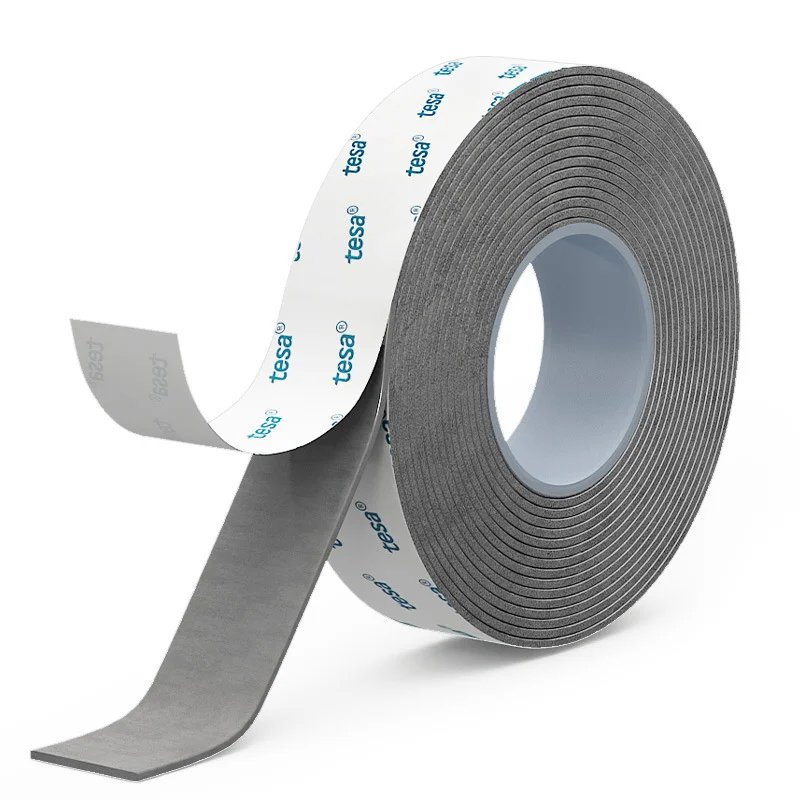
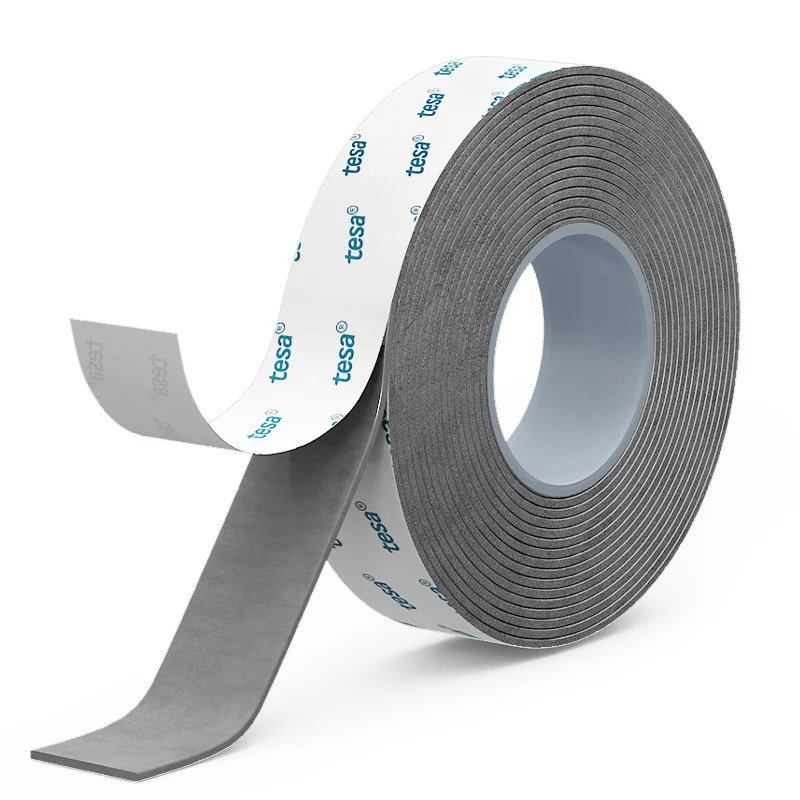
| Product Type | Double-Sided Acrylic Foam Tape |
| Adhesive Type | LSE |
| Backing Material | Acrylic Foam |
| Color | Gray |
| Liner | PE |
| Total Thickness | 1,100 µm |
| Construction | Three-layer symmetrical |
| Adhesion to ABS, Initial | 28 N/cm |
| Adhesion to ABS, After 3 Days | 30 N/cm |
| Adhesion to PP, Initial | 33 N/cm |
| Adhesion to PP, After 3 Days | 38 N/cm |
| Adhesion to Steel, Initial | 30 N/cm |
| Adhesion to Steel, After 3 Days | 33 N/cm |
| Application Type | Permanent Mounting |
| LSE Substrate Bonding | Excellent |
The values above are representative technical values published by tesa and should not be treated as contractual specifications. Actual performance depends on substrate, surface preparation, bonding area, pressure, temperature, aging and application conditions.
Applications
- Decorative glass panel mounting
- Plastic panel mounting
- Nameplate mounting
- Parts mounting
- TV back panel mounting
- Automotive interior component mounting
- Appliance component mounting
- Plastic trim attachment
- Decorative component bonding
- Electronic device component mounting
- LSE plastic assembly
- Permanent industrial mounting
- Panel and enclosure assembly
tesa specifically lists decorative glass panels, plastic panels, nameplates and parts, and TV back panels as example applications.
Compatible Materials
Tesa 6311 is particularly suitable for low surface energy materials, including:
- Polypropylene (PP)
- ABS
- Other LSE plastics
- Rigid plastics
- Plastic panels
- Painted metal
- Steel
- Glass
- Decorative glass
- Metal components
- Appliance components
For critical applications, especially when bonding plastics, painted surfaces or complex geometries, application-specific adhesion testing is recommended.
Industries
- Automotive
- Consumer Electronics
- Home Appliances
- Electrical & Electronics
- Industrial Equipment
- Furniture & Interior
- Building & Construction
- Signage & Display
- Plastics Manufacturing
- Metal Fabrication
- HVAC
- General Industrial Assembly
Why Choose
Tesa 6311 New Bond is particularly valuable when conventional double-sided tapes struggle to achieve reliable adhesion to low surface energy plastics such as PP.
Its high-performance LSE adhesive is designed to provide strong bonding without requiring a separate primer in suitable applications. This can simplify production processes, reduce processing steps and improve assembly efficiency.
The viscoelastic acrylic foam core also provides more than simple adhesion: it can absorb and dissipate dynamic and static loads, making the tape suitable for permanent mounting applications where components experience vibration, movement or mechanical stress.
Installation Guide
1. Surface preparation
Clean both substrates to remove dust, grease, oil, moisture and other contaminants.
2. Check the substrate
Confirm that the surfaces are suitable for acrylic foam tape. Special attention should be given to LSE plastics such as PP.
3. Cut the tape
Select the appropriate width and length according to the bonding area. Avoid unnecessary joints.
4. Apply to the first substrate
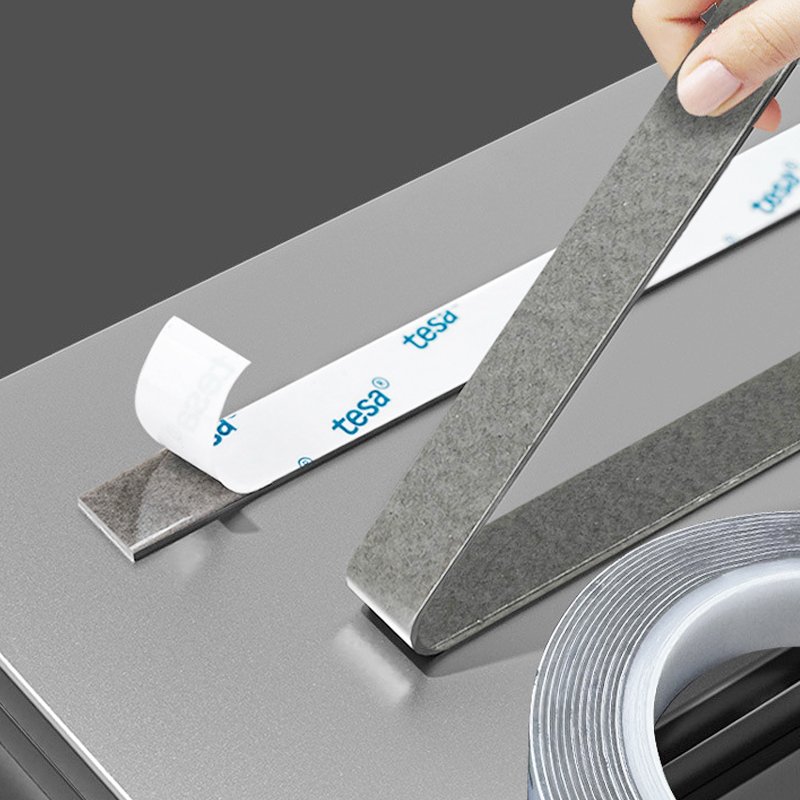
Remove the release liner and apply the tape evenly without stretching it.
5. Apply pressure
Use firm, uniform pressure across the bonded area to establish good adhesive contact.
6. Position the second substrate
Remove the remaining liner and carefully align the second component.
7. Press firmly
Apply uniform pressure over the entire bonding area.
8. Allow bonding development
Avoid excessive loading immediately after assembly. Adhesion generally develops over time.
9. Validate the application
For production applications, perform application-specific testing under the actual temperature, load, substrate and environmental conditions.
Storage
- Store in the original packaging.
- Keep rolls clean and dry.
- Protect from direct sunlight.
- Avoid excessive heat and humidity.
- Keep away from dust, oil and chemical contamination.
- Store under controlled indoor conditions.
- Follow the latest tesa technical documentation for specific storage and shelf-life requirements.
FAQ
Q1: What is tesa 6311 New Bond?
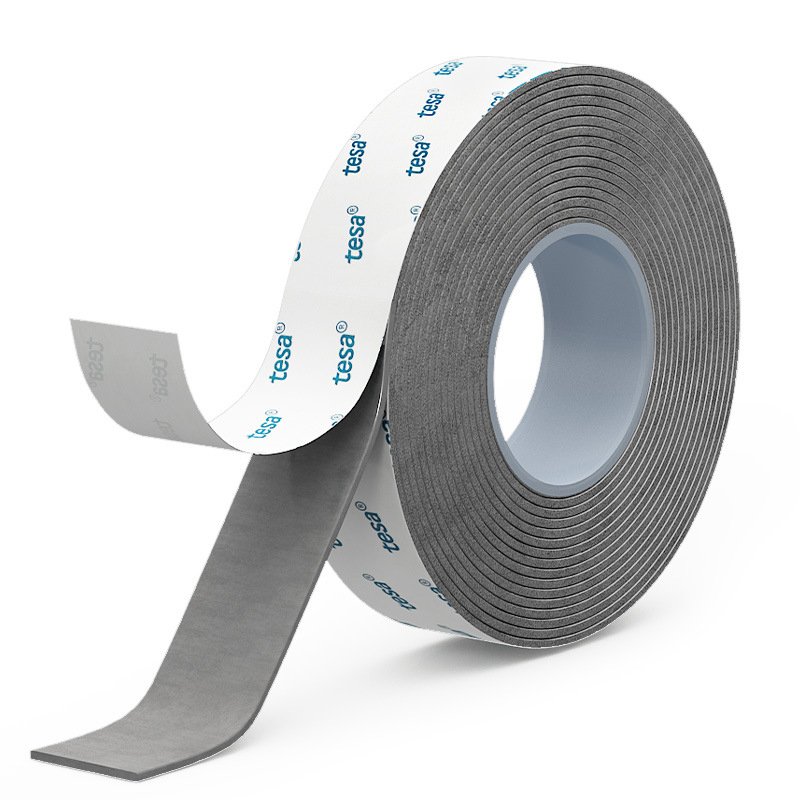
tesa 6311 New Bond is a 1,100 µm double-sided acrylic foam tape with high-performance LSE adhesive on both sides.
Q2: Is tesa 6311 suitable for polypropylene (PP)?
Yes. PP is specifically one of the substrates for which tesa publishes adhesion data. Initial adhesion to PP is listed at 33 N/cm, increasing to 38 N/cm after 3 days under the stated test conditions.
Q3: Does tesa 6311 require primer?
The product is designed to provide strong bonding to suitable LSE substrates without primer, helping simplify the bonding process. Actual application suitability should still be validated for the specific substrate and conditions.
Q4: What is the thickness of tesa 6311?
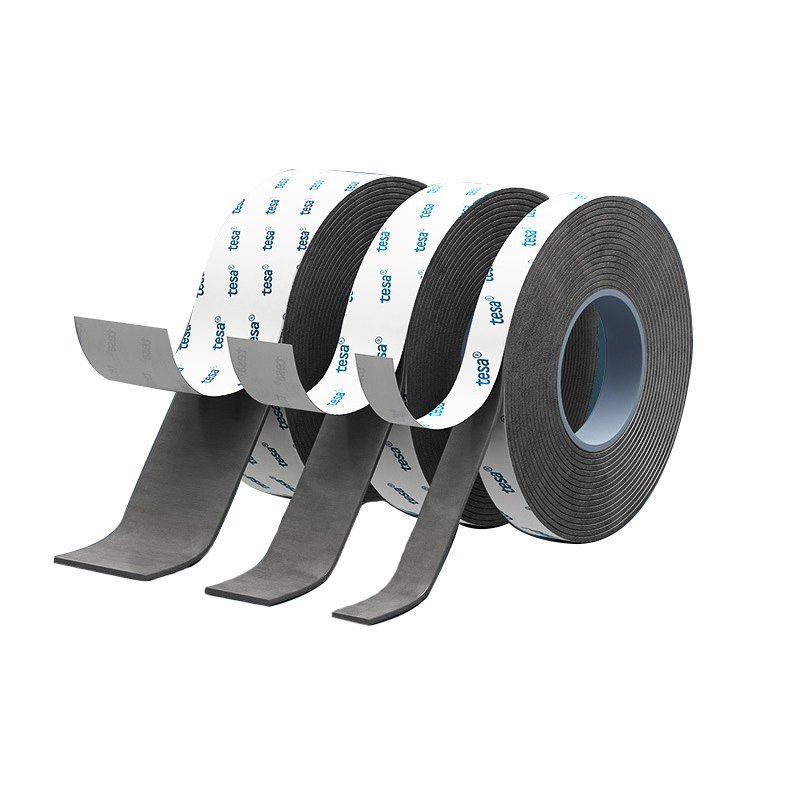
The standard tesa 6311 New Bond version has a total thickness of 1,100 µm. Other thicknesses in the same range include 400, 500, 640, 800 and 1,500 µm.
Q5: What color is tesa 6311?
The standard 6311 New Bond is gray.
Q6: What is the backing material?
The backing is a viscoelastic acrylic foam designed to absorb and dissipate dynamic and static loads.
Q7: What is the adhesive type?
It uses a high-performance LSE adhesive designed for bonding low surface energy substrates.
Q8: Can tesa 6311 be used for permanent mounting?
Yes. tesa positions 6311 for a wide range of permanent mounting applications.
Q9: Is tesa 6311 suitable for metal and glass?
Yes. Steel and decorative glass are among the application/substrate areas associated with the product. However, final performance should be verified for the exact surface finish and application conditions.
Q10: What is the difference between tesa 6311 and conventional foam tape?
tesa 6311 uses a high-performance LSE adhesive and acrylic foam construction, giving it a particular advantage when bonding difficult-to-bond plastics such as PP. Its viscoelastic core also helps absorb and dissipate mechanical loads.
Downloads
Available upon request:
- Tesa 6311 Foam Tape Technical Data Sheet (TDS)
- Safety Data Sheet (SDS)
- Product Brochure
- Die-Cutting Capability Guide
Please contact our sales team if you require the latest technical documentation.