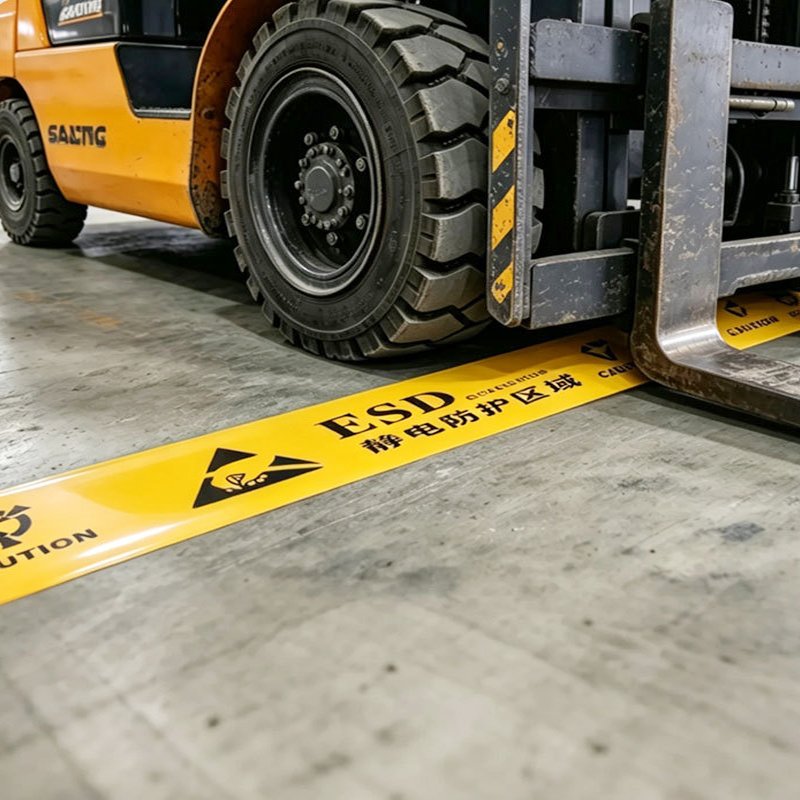
Benefits
-
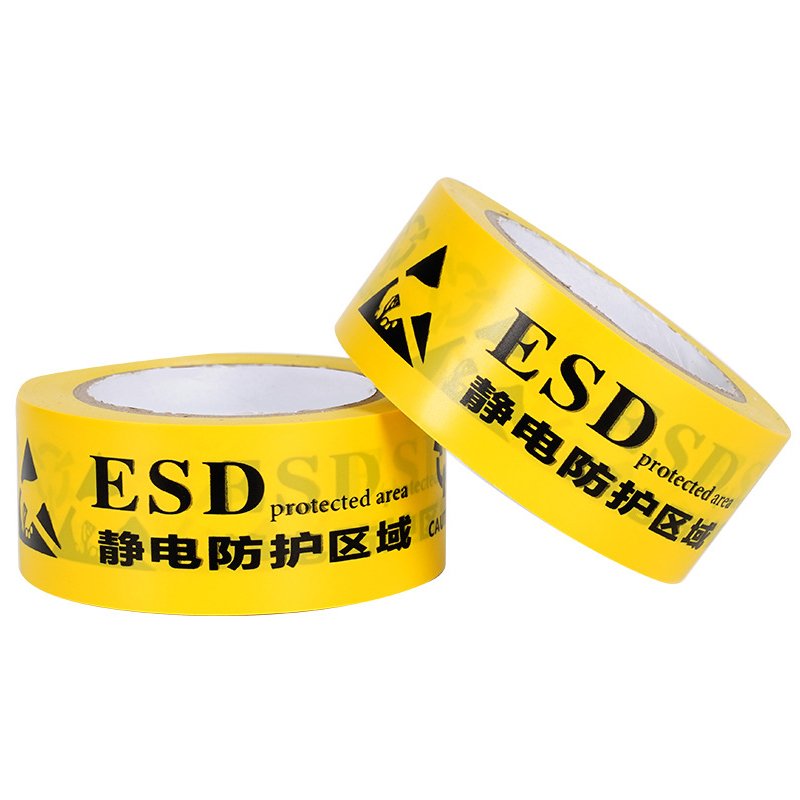
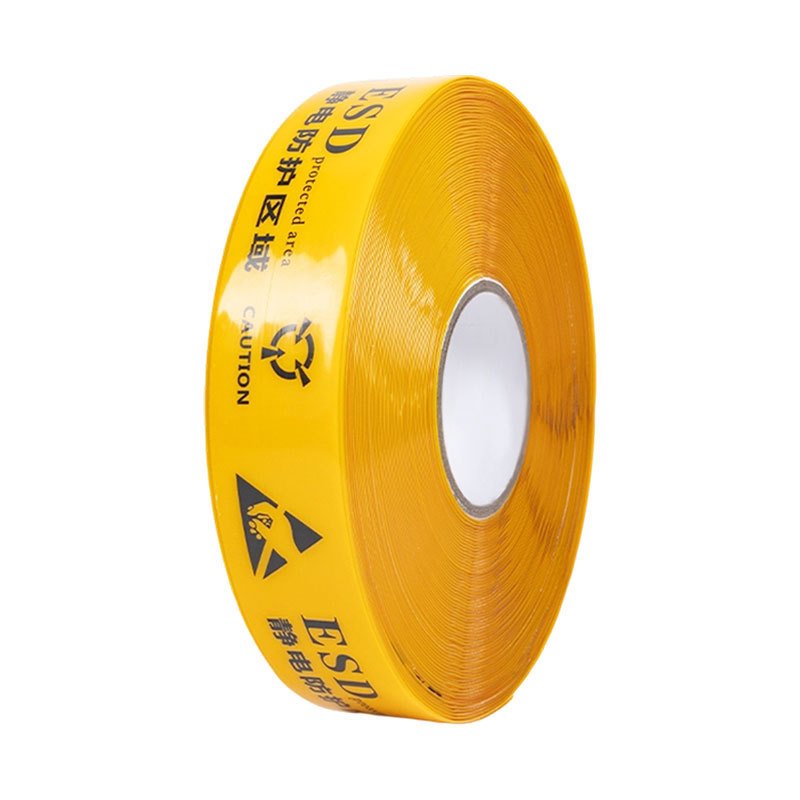
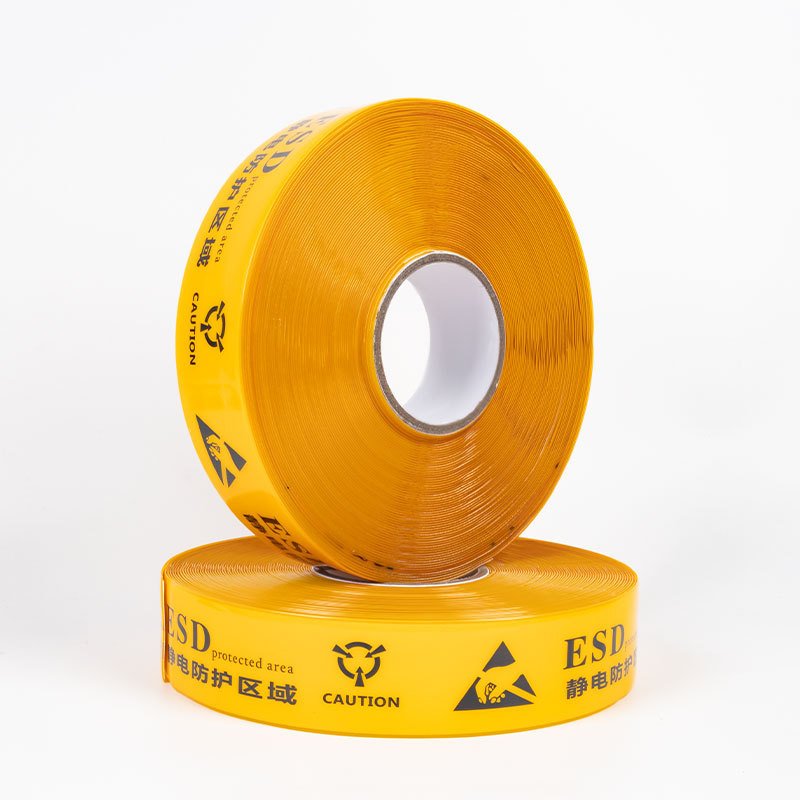
Helps identify electrostatic-sensitive work areas and restricted zones.
-
Supports visual management in ESD-protected production environments.
-
Improves the visibility of workshop boundaries and designated operating areas.
-
Provides a durable alternative to temporary floor marking methods in suitable applications.
-
Helps reduce edge lifting when correctly matched to the floor surface and installation conditions.
-
Supports organized production lines, equipment zones, and material storage areas.
-
Offers flexible specifications for different industrial floor marking requirements.
Technical Specifications
| Property | Specification |
|---|---|
| Product Name | ESD Anti-Static Floor Marking Tape |
| Backing Material | To Be Confirmed |
| Adhesive Type | High-Adhesion Pressure-Sensitive Adhesive |
| Adhesive Description | Nano Adhesive Construction, Subject to Confirmation |
| Color | Yellow |
| Surface Finish | To Be Confirmed |
| Total Thickness | Customized / To Be Confirmed |
| Width | Customized |
| Roll Length | Customized |
| ESD Performance | To Be Confirmed by Test Data |
| Surface Resistance | To Be Confirmed |
| Adhesion | To Be Confirmed |
| Abrasion Resistance | Wear-Resistant Construction |
| Water Resistance | Subject to Product Construction |
| Application | ESD Area Identification and Industrial Floor Marking |
| Packaging | Customized Roll Packaging |
Technical note: ESD performance must be verified using the applicable surface-resistance or electrical-resistance test method.
Applications
1. ESD-Protected Workshop Area Marking
Used to identify electrostatic-sensitive work areas, ESD-controlled zones, and designated production spaces.
2. Electronics Manufacturing Facilities
Suitable for visual identification of production areas, assembly stations, inspection zones, and material handling areas in electronics factories.
3. Industrial Floor Marking
Used to mark workshop boundaries, equipment locations, operating areas, and designated walkways.
4. Production Line Identification
Helps define workstation boundaries, production routes, material storage positions, and equipment zones.
5. Warehouse and Logistics Area Marking
Can be used to identify storage areas, handling zones, and designated operating boundaries on suitable floors.
6. Equipment and Maintenance Zones
Helps identify maintenance areas, restricted-access spaces, and equipment operating boundaries.
Compatible Materials
ESD floor marking tape can be evaluated for application on suitable clean, dry, and smooth surfaces, including:
-
Epoxy-coated floors
-
Smooth concrete floors with suitable surface preparation
-
ESD flooring systems
-
Painted metal surfaces
-
Stainless steel
-
Aluminum
-
Other compatible industrial substrates
Adhesion and ESD performance depend on the substrate, surface coating, contamination, and installation conditions. Always conduct compatibility testing before large-scale application.
Industries
-
Electronics Manufacturing
-
Semiconductor Manufacturing
-
Electrical and Electronic Assembly
-
Automotive Electronics
-
Precision Instrument Manufacturing
-
Industrial Machinery
-
Warehousing and Logistics
-
General Manufacturing
Why Choose Yousan?
Yousan provides industrial adhesive tape sourcing, converting, and customized processing solutions for different manufacturing requirements.
Our services include:
-
Custom adhesive tape slitting and rewinding
-
Customized roll widths and lengths
-
Precision die-cutting
-
Customized adhesive tape components
-
OEM and ODM converting support
-
Material and specification evaluation
-
Support for industrial floor marking and ESD-related applications
For customers requiring ESD floor marking tape, Yousan can help evaluate suitable product constructions based on electrical performance, floor compatibility, thickness, adhesion, and application conditions.
Custom solutions can be discussed according to project requirements and verified material availability.
Installation Guide
-
Surface Inspection: Check the floor for cracks, loose coatings, uneven areas, and other defects.
-
Surface Cleaning: Remove dust, oil, grease, moisture, and other contaminants.
-
Surface Drying: Ensure the application area is completely dry before installation.
-
ESD Compatibility Check: Confirm that the selected tape meets the electrical requirements of the designated ESD area.
-
Positioning: Mark the required floor boundaries and installation lines.
-
Liner Removal: Remove the release liner gradually without touching the exposed adhesive.
-
Tape Application: Apply the tape smoothly and evenly along the designated area.
-
Pressure Application: Apply firm, even pressure to improve adhesive contact.
-
Final Inspection: Check edges, corners, and bonding conditions before putting the area into service.
For areas exposed to forklifts, heavy trolleys, or frequent turning movements, conduct an actual floor trial before full-scale installation.
Storage
-
Store in the original packaging.
-
Keep in a clean, cool, and dry environment.
-
Avoid direct sunlight and excessive heat.
-
Protect the tape from dust, moisture, and contamination.
-
Avoid contact with solvents and incompatible chemicals.
-
Store rolls in a manner that prevents deformation.
-
Follow the storage conditions and shelf life specified in the product datasheet.
FAQ
1. What is ESD anti-static floor marking tape?
It is a specialized adhesive marking tape intended for identifying electrostatic-sensitive areas and supporting visual management in ESD-controlled environments. Its electrical performance must be confirmed by test data.
2. Is ESD floor marking tape suitable for electronics factories?
It can be used to identify ESD-controlled work areas, production zones, and designated walkways. The selected product must meet the facility’s ESD requirements.
3. Is this tape electrically conductive or static dissipative?
The electrical classification depends on the actual material construction and test results. Conductive, static-dissipative, and insulating materials are not interchangeable. Please confirm the required electrical resistance range.
4. Is the tape suitable for heavy-duty floor marking?
The thickened and wear-resistant construction is intended for demanding industrial marking applications. Suitability for frequent forklift traffic must be confirmed through abrasion, adhesion, edge-lifting, and actual floor testing.
5. Can it be applied to epoxy floors?
It can be evaluated for smooth, clean, and fully cured epoxy surfaces. A small-area adhesion test is recommended before installation.
6. Is the tape waterproof?
Water resistance depends on the backing, adhesive, and edge condition. Prolonged water exposure and industrial floor cleaning should be evaluated under actual conditions.
7. Can customized widths and roll lengths be supplied?
Customized widths and roll lengths can be evaluated according to the project requirements and available converting capabilities.
8. What is nano adhesive tape?
Nano adhesive is a commercial term used for different adhesive constructions. The exact adhesive chemistry and performance should be confirmed through the product specification rather than assumed from the name.
9. Can the tape be used on ESD flooring without affecting its performance?
This depends on the electrical properties of the tape and the underlying ESD floor system. Compatibility and grounding-path requirements should be evaluated before use.
Downloads
Available upon request:
- ESD Floor Marking Tape Technical Data Sheet (TDS)
- Safety Data Sheet (SDS)
- Product Brochure
- Die-Cutting Capability Guide
Please contact our sales team if you require the latest technical documentation.