Benefits
-
Helps reduce electromagnetic interference when correctly designed and installed in a shielding system.
-
Supports shielding of small electronic components and selected cable assemblies.
-
Can be used for prototyping, electrical design, testing and troubleshooting.
-
The removable liner helps protect the adhesive before application and facilitates precision converting.
-
The copper backing can be soldered where the assembly design and soldering process permit.
-
Supports customized tape shapes through die-cutting and slitting.
Important: The adhesive is non-conductive. Do not assume that the adhesive layer itself provides electrical continuity between surfaces. If electrical continuity through the adhesive is required, evaluate a conductive-adhesive tape such as 3M 1126.
Technical Specifications
| Property | Specification |
|---|---|
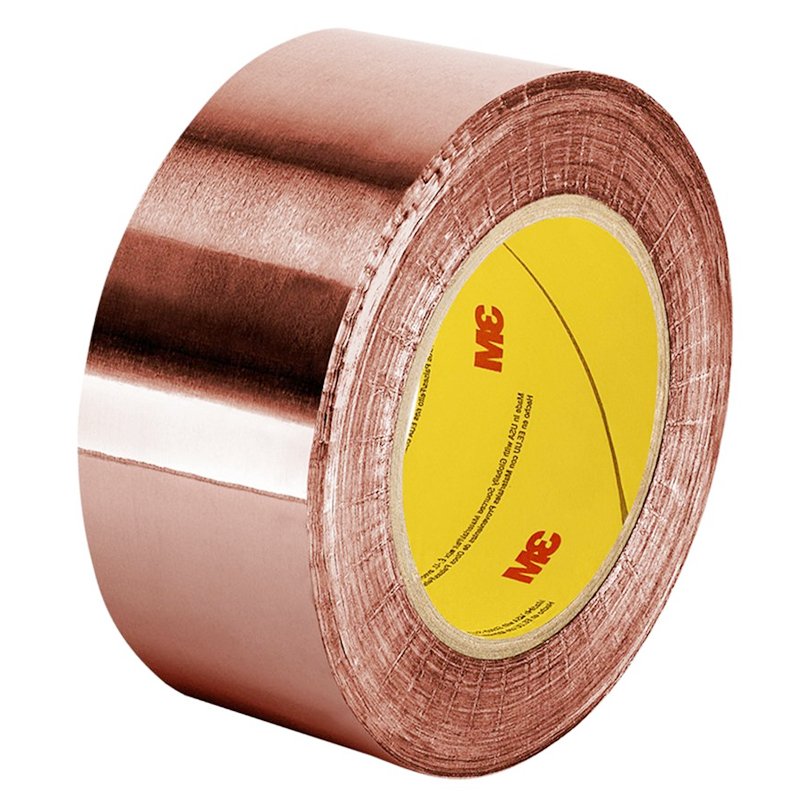
| Product name | 3M™ Copper Foil EMI Shielding Tape 1125 |
| Backing material | Flat copper foil |
| Adhesive type | Non-conductive acrylic pressure-sensitive adhesive |
| Nominal backing thickness | 0.036 mm (1.4 mil) |
| Total tape thickness, excluding liner | 0.067 ± 0.006 mm |
| Minimum adhesion to steel | 3.3 N/cm |
| Minimum breaking strength | 39 N/cm |
| Average shielding effectiveness | 65 dB over 300 kHz–2.5 GHz, under the specified test method |
| Flame-retardant classification | UL 510A, Category OARC2, File E17385, according to the TDS |
| Electrical rating | 600V dry applications |
| Release liner | Removable liner |
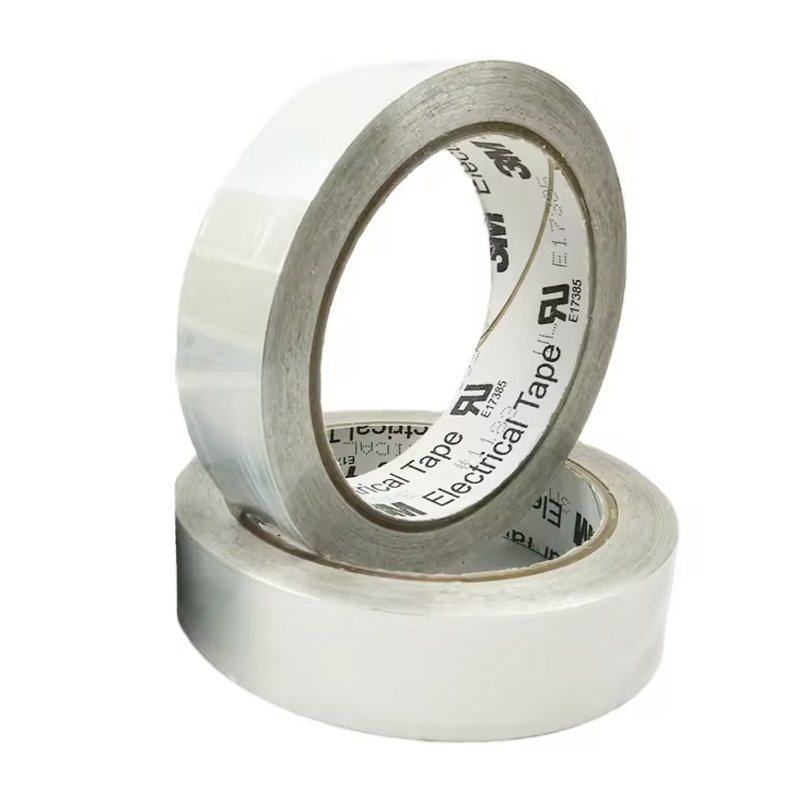
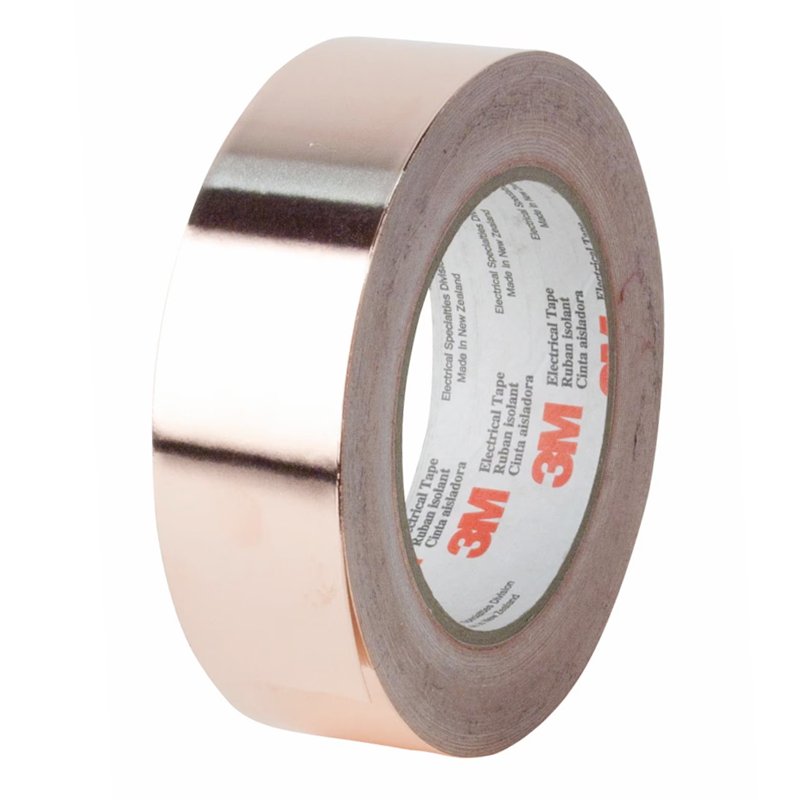
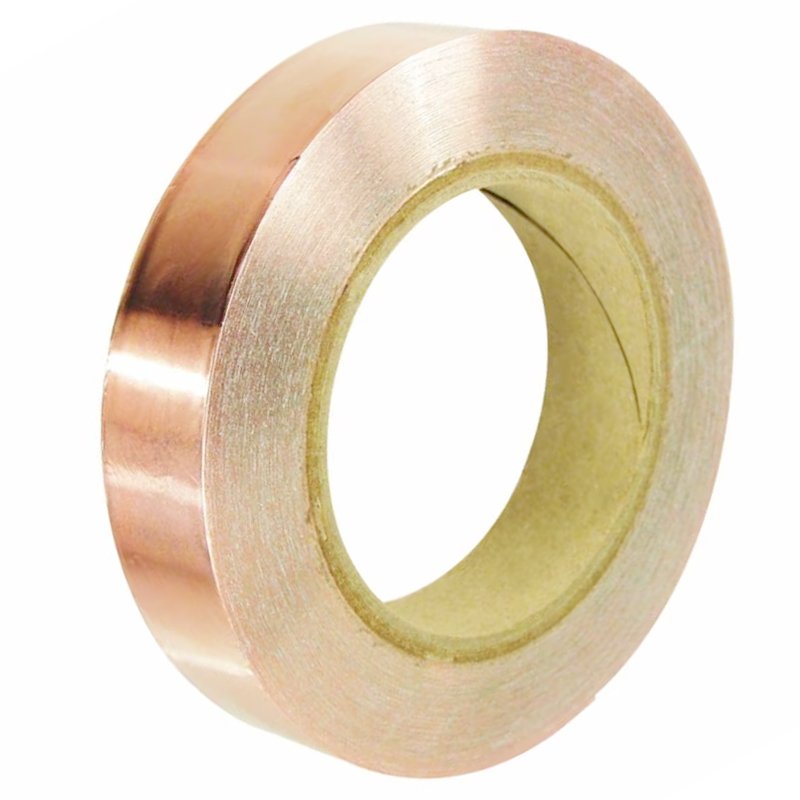
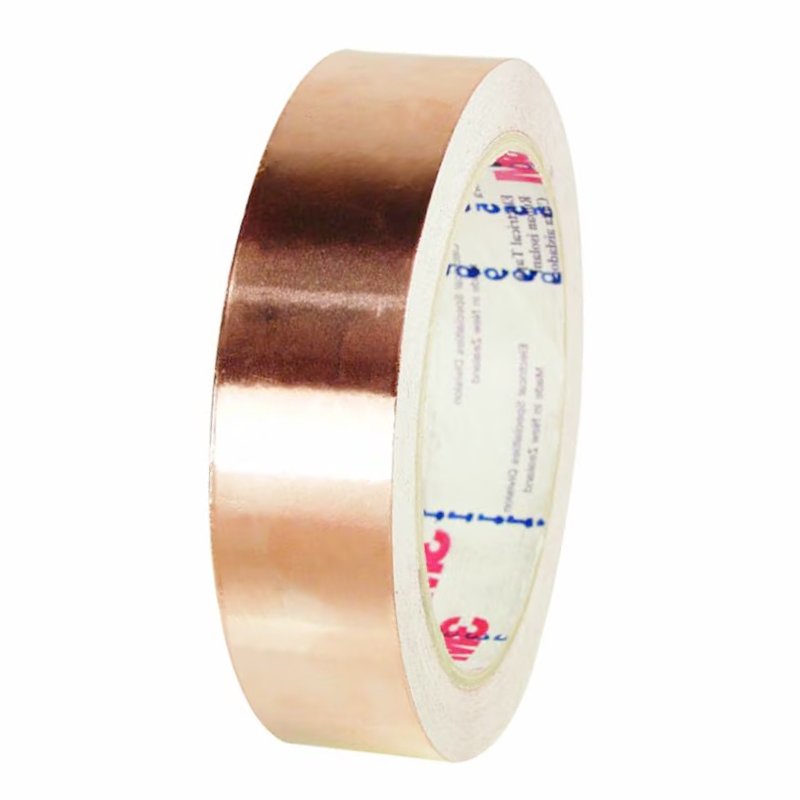
| Appearance | Copper-colored foil |
| Example standard roll size | 25.4 mm × 33 m (1 in × 36 yd) |
| Shelf life | 5 years from manufacture when stored under specified conditions |
Note: Mechanical and shielding values are typical or minimum values measured under the manufacturer’s stated test methods. Actual shielding performance depends on frequency, contact quality, substrate, surface condition and installation. Confirm the latest TDS and exact product configuration before using these values in engineering specifications.
Applications
-
EMI/RFI shielding for electronic components and assemblies.
-
Shielding and repair of printed wiring boards.
-
Shielding cable splices and selected cable assemblies.
-
Supplementary shielding of joints and seams.
-
Seaming applications in shielded rooms.
-
Static charge draining in suitable designs.
-
Electrical design, prototyping and laboratory troubleshooting.
-
Precision die-cut shielding components.
Compatible Materials
Potential application surfaces and assemblies include:
-
Printed wiring board assemblies.
-
Metal equipment enclosures and shielding panels.
-
Cable and wire assemblies.
-
Selected non-solderable surfaces requiring shielding contact.
-
Electronic components and prototype assemblies.
Substrate compatibility and shielding performance depend on the surface finish, cleanliness, geometry and electrical contact design. Test the complete assembly before production use.
Industries
-
Electronics and electrical equipment.
-
Telecommunications and networking.
-
Printed circuit board assembly and repair.
-
Industrial electronics manufacturing.
-
EMI/RFI shielding and grounding solutions.
-
Electrical engineering and test laboratories.
-
Enclosure, cable and component manufacturing.
Why Choose 3M 1125?
3M 1125 combines a thin copper foil backing with a non-conductive acrylic adhesive and removable liner. It is designed for EMI/RFI shielding, electronic component protection, cable-splice shielding and prototype development.
Its solderable copper backing and linered construction make it useful for selected electrical design and precision converting applications. However, because the adhesive is non-conductive, applications requiring electrical continuity through the adhesive should be assessed carefully. Where conductive bonding through the adhesive is essential, a conductive-adhesive product may be more appropriate.
Yousan can evaluate slitting and precision die-cutting requirements based on the target dimensions, drawings and estimated quantity.
Installation Guide
-
Prepare the surface: Ensure the bonding surface is clean, dry and free from dust, oil and other contaminants.
-
Confirm the design: Verify that 3M 1125’s non-conductive adhesive is appropriate for the required shielding and electrical-contact arrangement.
-
Cut to size: Use suitable cutting or die-cutting equipment to produce the required shape.
-
Remove the liner: Peel away the release liner without contaminating the adhesive.
-
Apply the tape: Position the tape carefully and press it down evenly to establish intimate contact with the surface.
-
Inspect the assembly: Check adhesion, seams and contact points.
-
Validate shielding performance: Conduct electrical continuity and EMI/RFI shielding tests using the methods and frequency ranges relevant to the finished product.
Follow the manufacturer’s instructions and validate the completed assembly under actual operating conditions.
Storage
-
Store in the original packaging in a clean, dry and humidity-controlled environment.
-
Recommended storage conditions: 10°C to 27°C and below 75% relative humidity.
-
Protect the tape from direct sunlight, excessive heat, moisture and contamination.
-
The manufacturer’s TDS specifies a shelf life of 5 years from the date of manufacture when stored under the stated conditions.
FAQ
1. What is 3M 1125 copper foil tape used for?
It is designed for EMI/RFI shielding, printed wiring board repair and modification, cable-splice shielding, shielded-room seams and related electrical design applications.
2. Is the adhesive on 3M 1125 electrically conductive?
No. The adhesive is a non-conductive acrylic pressure-sensitive adhesive. The copper backing is conductive, but electrical continuity through the adhesive layer should not be assumed.
3. What is the difference between 3M 1125 and 3M 1126?
3M 1125 uses non-conductive acrylic adhesive, while 3M 1126 uses electrically conductive acrylic adhesive. Choose according to whether electrical continuity through the adhesive is required.
4. Can 3M 1125 be soldered?
The copper foil backing is solderable. Confirm the soldering process and conditions against the manufacturer’s guidance and the requirements of the finished assembly.
5. Can 3M 1125 be die-cut?
Yes. It is supplied with a removable liner that supports handling and die-cutting. Actual tolerances and processing performance depend on the part design, tooling and converting process.
6. What is the shielding effectiveness of 3M 1125?
The June 2021 manufacturer TDS reports average shielding effectiveness of 65 dB over 300 kHz–2.5 GHz under the specified test method. Actual results depend on the application, frequency, contact quality and installation.
7. Is 3M 1125 flame-retardant?
The manufacturer’s TDS specifies flame-retardant performance under UL 510A, Category OARC2, File E17385. Verify the current documentation for the required application and market.
8. Is 3M 1125 suitable for 600V applications?
The manufacturer identifies it for 600V dry applications. This rating should not be interpreted as approval for every electrical insulation application or for wet environments.
9. Can 3M 1125 be used outdoors?
Do not assume outdoor suitability without reviewing the environmental conditions and product documentation. Validate exposure to moisture, temperature changes, UV and other environmental factors before use.
Downloads
Available upon request:
- 3M 1125 Copper Foil Tape Technical Data Sheet (TDS)
- Safety Data Sheet (SDS)
- Product Brochure
- Die-Cutting Capability Guide
Please contact our sales team if you require the latest technical documentation.