
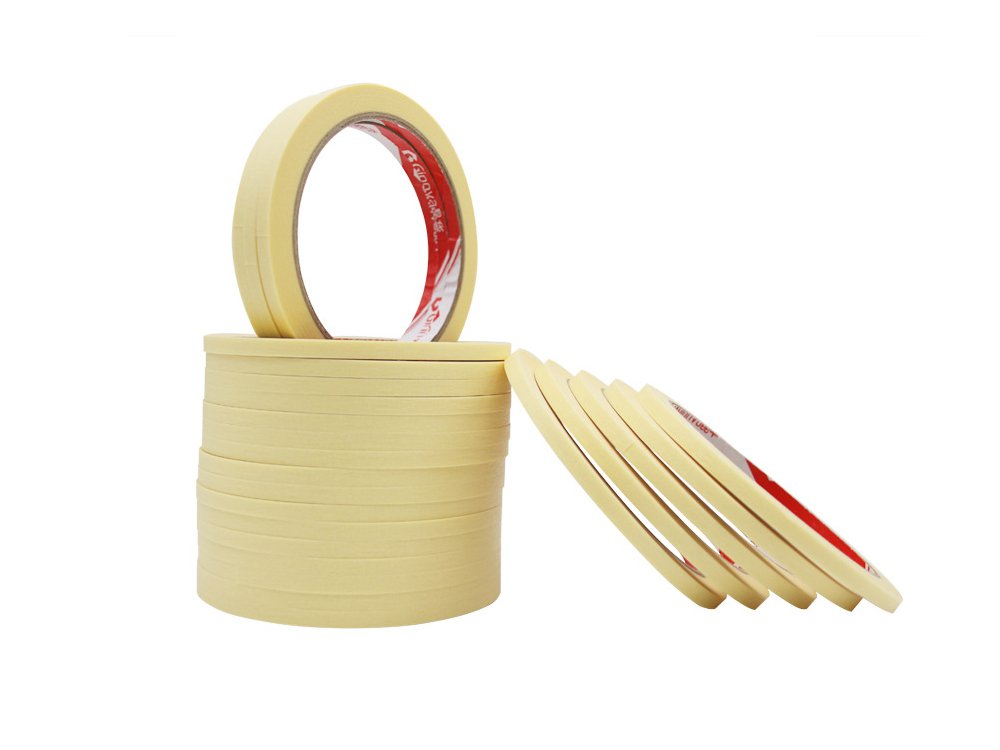
Silicone masking tape is a high-temperature industrial masking tape designed to protect selected areas of a surface during processes such as powder coating, anodizing, painting, plating, thermal spraying, and other high-temperature treatments. With a silicone-based adhesive system, it provides reliable adhesion, temperature resistance, chemical resistance, and clean removal from many metal and industrial surfaces.
For manufacturers looking for high temperature masking tape, silicone masking tape is an effective solution when conventional acrylic or rubber-based masking tapes cannot withstand the required processing conditions.
What Is Silicone Masking Tape?
Silicone masking tape is an industrial masking tape that combines a heat-resistant backing with a silicone adhesive. The silicone adhesive is engineered to maintain stable adhesion during elevated-temperature processing while allowing the tape to be removed with minimal adhesive residue after the process.
Depending on the application, silicone masking tape can be manufactured with different backing materials, including polyester (PET), polyimide, fiberglass, and other specialty substrates.
The tape can also be converted into custom widths, rolls, strips, and precision die-cut masking parts for automated or highly precise industrial applications.
Key Characteristics of Silicone Masking Tape
- High-temperature resistance
- Silicone adhesive technology
- Clean removal
- Low adhesive residue
- Good chemical resistance
- Reliable adhesion
- Excellent conformability
- Good edge definition
- Customizable widths and shapes
- Suitable for die-cutting
- Available for industrial OEM applications
Why Use Silicone Masking Tape for High-Temperature Processes?
The primary advantage of silicone masking tape is its ability to maintain adhesion under demanding processing conditions.
During processes such as powder coating or anodizing, the masking material may be exposed to elevated temperatures, chemicals, solvents, or coating materials. A conventional masking tape may soften, lose adhesion, shrink, or leave adhesive residue.
A properly selected silicone masking tape can provide better performance under these conditions.
1. High-Temperature Performance
Silicone adhesive technology is suitable for many high-temperature industrial processes. Depending on the construction and grade, silicone masking tapes can be engineered for different temperature requirements.
The exact temperature capability should always be evaluated based on:
- Processing temperature
- Exposure time
- Substrate
- Tape construction
- Chemical environment
- Removal conditions
2. Clean Removal
Clean removal is particularly important in industrial masking.
After coating, anodizing, painting, or other processing, manufacturers need to remove the masking tape without damaging the finished surface or leaving excessive adhesive residue.
Silicone adhesive systems can provide clean removal when the appropriate grade is selected and applied correctly.
3. Chemical Resistance
Many industrial processes involve chemicals, solvents, coatings, or cleaning agents.
Silicone masking tape can provide good resistance to a variety of processing environments, making it suitable for applications where chemical exposure is an important consideration.
4. Reliable Masking
A high-quality masking tape must remain securely attached during processing.
Reliable adhesion helps prevent:
- Coating leakage
- Unwanted paint coverage
- Contamination
- Edge lifting
- Rework
- Surface defects
Silicone Masking Tape for Powder Coating
Powder coating masking is one of the most common applications for high-temperature silicone masking tape.
During powder coating, selected areas of a metal component may need to remain uncoated. The masking tape is applied to these areas before the component enters the coating and curing process.
The tape must withstand the process temperature while maintaining sufficient adhesion.
Typical Powder Coating Applications
Silicone masking tape can be used to mask:
- Threaded holes
- Mounting holes
- Machined surfaces
- Electrical contact points
- Grounding areas
- Sealing surfaces
- Connection points
- Precision edges
- Component interfaces
For high-volume production, silicone masking tape can also be converted into custom die-cut masking pieces, allowing operators to apply a pre-shaped masking component instead of manually cutting tape.
Silicone Masking Tape for Anodizing
Anodizing is another important application for silicone masking tape.
During aluminum anodizing, certain areas may need to remain untreated or maintain electrical contact. Proper masking helps prevent unwanted surface treatment in these areas.
Silicone masking tape can be selected according to:
- Aluminum alloy
- Surface condition
- Anodizing chemistry
- Processing temperature
- Immersion time
- Required removal performance
For complex components, custom die-cut masking solutions can provide more accurate and repeatable masking than manually applied tape.
Silicone Masking Tape vs. Conventional Masking Tape
Not every masking tape is suitable for high-temperature industrial processing.
| Feature | Silicone Masking Tape | Conventional Masking Tape |
|---|---|---|
| High-temperature resistance | Excellent for suitable grades | Usually limited |
| Adhesive technology | Silicone | Acrylic/rubber commonly used |
| Clean removal | Excellent when properly selected | Application dependent |
| Chemical resistance | Good to excellent | Application dependent |
| Powder coating | Suitable grades available | Often unsuitable |
| Anodizing | Suitable grades available | Often limited |
| Die-cutting | Available | Available |
| Industrial masking | Excellent | General-purpose applications |
The correct tape should be selected according to the actual process rather than temperature alone.
Silicone Masking Tape Technical Specifications
The construction of silicone masking tape can be customized according to application requirements.
| Specification | Available Options |
|---|---|
| Product Type | Silicone Masking Tape |
| Adhesive | Silicone |
| Backing | PET, Polyimide, Fiberglass, Specialty Materials |
| Color | Multiple colors available |
| Thickness | Application-specific |
| Width | Custom slit widths |
| Roll Length | Customized |
| Adhesion | Application-specific |
| Temperature Resistance | Grade dependent |
| Chemical Resistance | Grade dependent |
| Die-Cutting | Available |
| OEM/ODM | Available |
Important: Temperature resistance, adhesion, tensile strength, elongation, and other technical values vary according to the specific construction. A product-specific TDS should be requested before production use.
How to Choose the Right Silicone Masking Tape
Choosing the right silicone masking tape requires more than simply looking at the maximum temperature.
Manufacturers should consider the following factors.
1. Processing Temperature
Determine the actual temperature the tape will experience rather than the equipment’s maximum temperature.
2. Exposure Time
A tape exposed to a high temperature for several minutes may behave differently from a tape exposed for several hours.
3. Substrate
Consider whether the tape will be applied to:
- Aluminum
- Stainless steel
- Steel
- Glass
- Ceramic
- Plastic
- Painted surfaces
- Composite materials
4. Chemical Exposure
If the tape will contact solvents, acids, alkaline solutions, coatings, or cleaning agents, chemical compatibility should be evaluated.
5. Removal Requirements
For finished components, clean removal and low adhesive residue may be more important than maximum adhesion.
6. Masking Geometry
Flat surfaces can usually use standard rolls, while holes, curves, slots, and irregular shapes may benefit from custom die-cut silicone masking tape.
Custom Silicone Masking Tape and Die-Cut Solutions
Industrial manufacturers often require more than standard tape rolls.
Yousan can provide customized silicone masking tape solutions including:
- Custom widths
- Custom roll lengths
- Narrow slit rolls
- Strips
- Sheets
- Custom die-cut shapes
- Kiss-cut masking parts
- Laminated constructions
- OEM packaging
Why Use Die-Cut Masking Parts?
Custom die-cut masking parts can improve:
Application consistency → Masking accuracy → Production efficiency → Reduced material waste
They are particularly useful for manufacturers producing large quantities of identical components.
Applications of Silicone Masking Tape
Silicone masking tape can be used across a wide range of industrial processes.
Automotive
- Powder coating
- Component painting
- Surface treatment
- Metal finishing
- Thread and hole masking
Electronics
- PCB processing
- Component masking
- High-temperature assembly
- Electrical insulation
- Surface protection
Aerospace
- High-temperature processing
- Composite manufacturing
- Surface treatment
- Painting and coating
Metal Fabrication
- Powder coating
- Anodizing
- Plating
- Painting
- Thermal spraying
Appliance Manufacturing
- Metal finishing
- Powder coating
- Painting
- Surface protection
How to Apply Silicone Masking Tape
Proper application is essential for achieving clean masking results.
Step 1: Clean the Surface
Remove dust, oil, moisture, grease, and other contaminants.
Step 2: Select the Correct Tape
Choose the appropriate tape construction based on temperature, chemical exposure, substrate, and masking requirements.
Step 3: Apply the Tape
Apply the tape smoothly without wrinkles or air bubbles.
Step 4: Press the Tape
Apply sufficient pressure to ensure good contact between the adhesive and substrate.
Step 5: Complete the Process
Carry out the required coating, anodizing, painting, plating, or thermal process.
Step 6: Remove the Tape
After processing, remove the tape carefully. For high-temperature processes, follow the recommended cooling and removal conditions for the specific tape grade.
Why Choose Yousan for Silicone Masking Tape?
Yousan provides industrial adhesive tape, specialty tape, and die-cut tape solutions for manufacturers requiring customized masking materials.
Our silicone masking tape solutions can be developed according to:
- Temperature requirements
- Substrate compatibility
- Adhesion requirements
- Chemical exposure
- Masking geometry
- Roll dimensions
- Die-cut requirements
- Production volume
With tape converting and die-cutting capabilities, Yousan can support customers from material selection to customized finished masking components.
For OEM manufacturers, we can also discuss customized specifications, packaging, labeling, and production requirements.
Silicone Masking Tape FAQ
Is silicone masking tape heat resistant?
Yes. Silicone adhesive systems are widely used for high-temperature masking applications. However, the actual temperature resistance depends on the specific tape construction and process conditions.
Can silicone masking tape be used for powder coating?
Yes. High-temperature silicone masking tapes are commonly used for powder coating applications where selected areas of a component must remain uncoated.
Is silicone masking tape suitable for anodizing?
Suitable silicone masking tapes can be used for anodizing and other surface-treatment processes. Chemical compatibility and removal performance should be tested for the specific process.
Does silicone masking tape leave residue?
A properly selected silicone masking tape can provide clean removal with low adhesive residue. Performance depends on temperature, dwell time, substrate, surface cleanliness, and application conditions.
Can silicone masking tape be customized?
Yes. Silicone masking tape can be customized in width, roll length, backing, adhesive construction, color, and die-cut shape depending on production requirements.
Can you provide silicone masking tape samples?
Yes. Samples can be evaluated according to the customer’s application, substrate, temperature, process, and required dimensions.
What information should I provide when requesting a quotation?
For an accurate recommendation and quotation, provide:
- Application
- Substrate material
- Processing temperature
- Exposure time
- Required tape width
- Roll length
- Estimated quantity
- Required delivery location
- Whether die-cut parts are required
Silicone Masking Tape for Industrial Manufacturers
Silicone masking tape is more than a simple masking material. For high-temperature manufacturing processes, the correct tape can help improve masking accuracy, surface quality, production efficiency, and clean removal performance.
Whether you need standard silicone masking tape for powder coating and anodizing or custom die-cut masking components for automated production, selecting the correct adhesive and backing construction is critical.
Yousan can provide customized silicone masking tape solutions based on your process requirements. Contact us with your application, temperature, dimensions, and estimated quantity to receive a suitable recommendation.
If you would like to learn more about Yousan adhesive tapes, please visit our website at www.ysdiecut.com