
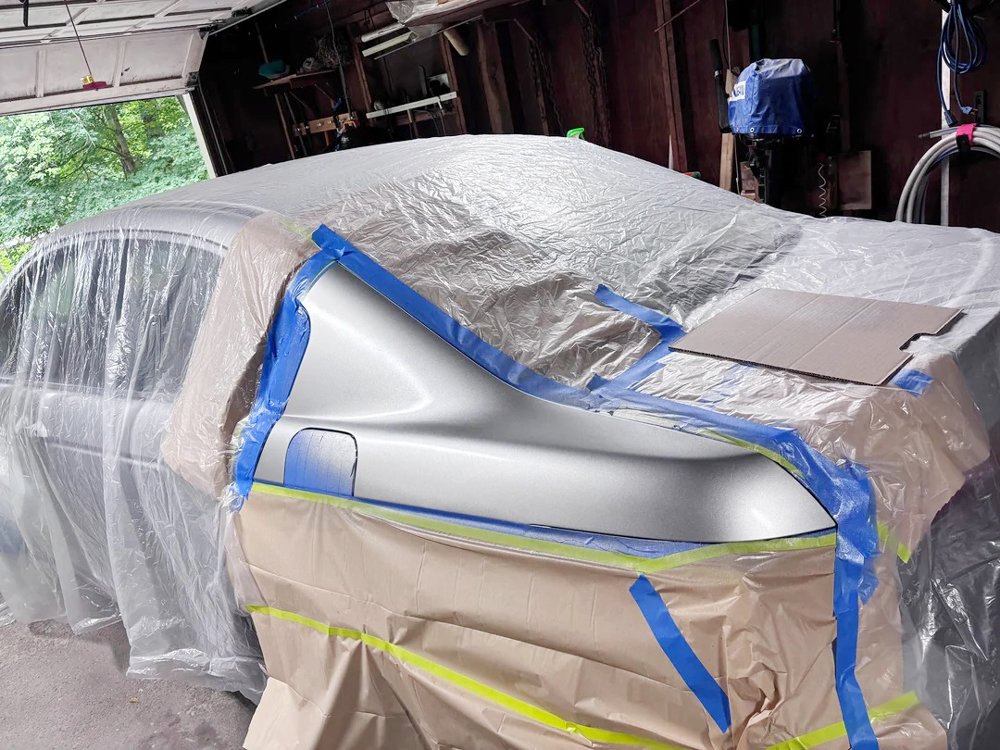
Automotive paint masking tape is a specialized masking tape designed to protect vehicle surfaces, trim, edges, windows, components, and other areas from unwanted paint, primer, coating, overspray, and finishing materials during automotive painting and refinishing processes.
Compared with general-purpose masking tape, automotive masking tape is designed around the specific requirements of automotive body repair, auto refinishing, collision repair, OEM vehicle manufacturing, and automotive component painting. The right tape should provide reliable adhesion, clean removal, sharp paint lines, conformability, and resistance to automotive paints and solvents.
For professional body shops and automotive manufacturers, choosing the appropriate automotive paint masking tape can help improve finish quality, reduce rework, and increase production efficiency.
What Is Automotive Paint Masking Tape?
Automotive paint masking tape is a pressure-sensitive masking tape used to temporarily cover areas that should not receive paint or other coatings.
It is commonly applied to:
- Vehicle body panels
- Windows and glass
- Rubber seals
- Door frames
- Trim
- Headlights and lamps
- Handles
- Moldings
- Emblems
- Wheels and automotive components
- Adjacent painted surfaces
During painting, the tape creates a temporary barrier between the protected surface and the coating material.
After painting and curing, the tape is removed to reveal a clean, defined paint edge.
Key Requirements for Automotive Paint Masking Tape
A high-quality automotive masking tape should offer:
- Clean and reliable removal
- Strong but controlled adhesion
- Sharp paint lines
- Good conformability
- Resistance to automotive paints
- Resistance to selected solvents and chemicals
- Good holding power
- Easy application and removal
- Low adhesive residue
- Compatibility with automotive substrates
Why Is Automotive Paint Masking Tape Important?
Automotive painting requires precise control of where paint is applied.
Overspray on windows, trim, seals, handles, or adjacent body panels can result in additional cleaning and rework. Poor-quality masking tape can also lift during painting, allowing paint to penetrate underneath the tape.
The right automotive paint masking tape helps create a reliable masking barrier and contributes to a cleaner final finish.
1. Creates Clean Paint Edges
One of the most important functions of automotive masking tape is creating a controlled paint boundary.
A suitable tape can help reduce paint bleeding and produce cleaner transition lines between different painted areas.
2. Protects Adjacent Surfaces
Automotive masking tape helps protect:
- Glass
- Chrome
- Plastic trim
- Rubber seals
- Painted panels
- Metal surfaces
- Interior components
from paint overspray and other finishing materials.
3. Reduces Rework
Paint contamination can require additional cleaning, sanding, polishing, or repainting.
Reliable masking can reduce unnecessary rework and improve overall shop efficiency.
4. Easy Removal
After painting, the masking tape needs to be removed efficiently without damaging the substrate or leaving excessive adhesive residue.
Clean removal is particularly important in professional automotive refinishing.
Automotive Paint Masking Tape for Auto Body Repair
Automotive masking tape is widely used in auto body repair and collision repair.
When a damaged vehicle is repaired and repainted, technicians may need to mask specific areas while applying:
- Primer
- Basecoat
- Clearcoat
- Touch-up paint
- Protective coatings
- Finishing materials
The tape should conform to curves and contours while maintaining sufficient adhesion during the painting process.
Typical Collision Repair Applications
Automotive masking tape can be used for:
- Fender painting
- Door painting
- Hood painting
- Bumper refinishing
- Roof painting
- Quarter-panel repair
- Spot repair
- Two-tone painting
- Trim masking
- Window masking
For complex body shapes, flexible masking tape can help technicians follow curved edges and irregular contours.
Automotive Masking Tape for OEM Manufacturing
Automotive OEM production environments often require masking materials that deliver consistent performance across large production volumes.
During automotive component manufacturing, masking tape may be used for:
- Powder coating
- Liquid painting
- E-coating
- Surface treatment
- Component finishing
- Painting of metal parts
- Painting of plastic components
For high-volume production, consistency is particularly important.
A suitable automotive masking tape should provide stable:
- Adhesion
- Thickness
- Width
- Tensile strength
- Removal characteristics
- Paint edge definition
Consistent tape performance can help reduce production variation.
Automotive Paint Masking Tape Materials
Different automotive painting processes require different tape constructions.
Crepe Paper Masking Tape
Crepe paper is widely used for automotive painting because it can conform to curves and irregular surfaces.
Typical advantages include:
- Good flexibility
- Easy tearing
- Good conformability
- Easy application
- Clean removal when properly selected
PET Masking Tape
PET masking tape provides a more dimensionally stable backing and can be suitable for applications requiring precise masking.
Typical characteristics include:
- Good dimensional stability
- Smooth surface
- Consistent thickness
- Good temperature resistance
- Suitable for precision masking
Polyimide Masking Tape
For higher-temperature automotive processing, polyimide masking tape can be considered.
It is commonly used where high temperature resistance and dimensional stability are required.
Silicone Masking Tape
Silicone adhesive masking tape is suitable for selected high-temperature processes and applications where clean removal and heat resistance are important.
Automotive Paint Masking Tape vs. General Masking Tape
Not all masking tapes are designed for automotive painting.
| Feature | Automotive Paint Masking Tape | General Masking Tape |
|---|---|---|
| Paint masking | Excellent | Good |
| Paint edge definition | High | Application dependent |
| Conformability | Excellent for suitable grades | Moderate to good |
| Clean removal | Designed for professional use | Application dependent |
| Solvent resistance | Grade dependent | Usually limited |
| Automotive refinishing | Yes | Not always recommended |
| Surface protection | Excellent | General purpose |
| Professional body shop use | Yes | Limited |
The correct product should be selected according to the paint system, substrate, temperature, and required removal performance.
How to Choose Automotive Paint Masking Tape
Selecting the right tape requires consideration of the entire painting process.
1. Consider the Paint Type
Different paint systems can interact differently with masking tape adhesives.
Consider whether the process uses:
- Water-based paint
- Solvent-based paint
- Primer
- Basecoat
- Clearcoat
- Powder coating
- Specialty coatings
2. Consider Temperature
Determine the highest temperature that the tape will experience.
For standard automotive refinishing, conventional automotive masking tapes may be sufficient. For higher-temperature processes, heat-resistant masking tape may be required.
3. Consider the Substrate
Common automotive substrates include:
- Steel
- Aluminum
- Glass
- ABS
- PP
- PVC
- Rubber
- Painted metal
- Composite materials
Adhesion should be tested on the actual substrate before production use.
4. Consider the Required Paint Edge
For precision painting and two-tone designs, the tape should provide good edge definition and resistance to paint bleed.
5. Consider Removal Time
The tape may remain on the vehicle for minutes, hours, or longer depending on the process.
The selected adhesive should provide appropriate holding power without becoming difficult to remove.
Automotive Paint Masking Tape Applications
Automotive masking tape is used throughout the vehicle manufacturing and repair industry.
Automotive Body Painting
- Car body painting
- Panel refinishing
- Two-tone painting
- Spot repair
- Collision repair
Automotive Component Painting
- Bumpers
- Wheels
- Interior components
- Metal brackets
- Trim
- Moldings
- Plastic components
Surface Treatment
- Powder coating
- E-coating
- Plating
- Anodizing
- Protective coating
Vehicle Protection
- Window masking
- Trim masking
- Door seal protection
- Glass protection
- Chrome protection
Custom Automotive Paint Masking Tape
Automotive manufacturers and large body shops may require customized tape products rather than standard rolls.
Yousan can provide customized solutions including:
- Custom widths
- Custom roll lengths
- Narrow slit rolls
- Jumbo rolls
- Custom colors
- Printed masking tape
- Custom packaging
- OEM products
- Die-cut masking parts
Die-Cut Automotive Masking Solutions
For components with repeated shapes or complex geometries, die-cut masking tape can improve application consistency.
Custom die-cut parts can be designed for:
- Holes
- Sensors
- Connectors
- Mounting points
- Small components
- Irregular surfaces
- Precision paint boundaries
This can help reduce manual cutting and improve production efficiency.
How to Apply Automotive Paint Masking Tape
Step 1: Prepare the Surface
The surface should be clean, dry, and free from dust, grease, wax, and other contaminants.
Step 2: Select the Appropriate Tape
Choose the tape according to the substrate, paint system, temperature, and required masking performance.
Step 3: Apply the Tape
Apply the tape smoothly along the masking boundary.
Avoid excessive stretching, wrinkles, and air pockets.
Step 4: Press the Tape Firmly
Press along the tape edge to ensure sufficient contact with the substrate.
This is particularly important when creating a sharp paint line.
Step 5: Apply Paint
Perform the painting or coating process according to the paint manufacturer’s instructions.
Step 6: Remove the Tape
Remove the tape according to the recommended timing and process conditions.
Inspect the painted edge after removal.
Common Problems with Automotive Paint Masking Tape
Paint Bleeding
Paint can penetrate beneath the tape when:
- The tape is not properly applied
- The surface is contaminated
- Excessive paint is applied
- The tape has insufficient adhesion
- The tape edge is not firmly pressed
Adhesive Residue
Residue can occur when:
- The tape remains applied for too long
- The temperature is excessive
- The adhesive is incompatible with the substrate
- The wrong tape grade is selected
Tape Lifting
Tape may lift when:
- The surface is dusty or oily
- The substrate has low surface energy
- The tape does not have sufficient adhesion
- The surface is highly curved
- The tape is excessively stretched
Selecting the appropriate automotive masking tape and preparing the substrate correctly can significantly reduce these problems.
Why Choose Yousan Automotive Paint Masking Tape?
Yousan provides industrial adhesive tape and customized converting solutions for automotive manufacturers, coating companies, and professional users.
Our capabilities include:
- Automotive masking tape solutions
- High-temperature masking tapes
- Silicone adhesive tapes
- PET masking tapes
- Polyimide masking tapes
- Custom slitting
- Precision die-cutting
- OEM/ODM production
- Custom packaging
- Application-specific recommendations
We can evaluate your requirements based on the substrate, paint system, temperature, masking dimensions, application method, and expected order quantity.
For high-volume automotive applications, customized tape specifications can also be developed to meet specific production requirements.
Automotive Paint Masking Tape FAQ
What is automotive paint masking tape?
Automotive paint masking tape is a specialized adhesive tape used to protect selected areas of a vehicle or automotive component from paint, coating, primer, and overspray.
What tape is best for automotive painting?
The best tape depends on the paint system, substrate, temperature, application time, and required paint edge. Professional automotive masking tapes are generally preferred over general-purpose masking tape.
Can automotive masking tape be used on car paint?
Yes, suitable automotive masking tape can be applied to properly prepared automotive paint surfaces. Testing is recommended, especially on fresh, soft, delicate, or aftermarket finishes.
Does automotive masking tape leave residue?
A properly selected automotive masking tape should provide clean removal under the specified application conditions. Adhesive residue can be affected by temperature, dwell time, substrate, and paint condition.
Can automotive masking tape withstand heat?
Some automotive masking tapes are designed for elevated-temperature applications. High-temperature processes may require PET, polyimide, or silicone adhesive masking tape.
Can you customize automotive masking tape?
Yes. Custom widths, roll lengths, backing materials, adhesive systems, packaging, and die-cut shapes can be developed for specific automotive applications.
Can automotive masking tape be used for two-tone painting?
Yes. A suitable precision masking tape can help create clean separation lines for two-tone automotive painting.
Conclusion
Automotive paint masking tape plays an important role in vehicle painting, refinishing, collision repair, and automotive component manufacturing. The right masking tape helps protect surfaces, create clean paint lines, reduce overspray, and minimize rework.
For standard automotive refinishing, flexible paper masking tape may be suitable. For demanding industrial processes, manufacturers can consider PET, polyimide, silicone adhesive, or other high-performance masking tape constructions.
For professional automotive manufacturers and coating companies, customized automotive masking tape and die-cut masking solutions can provide greater consistency and production efficiency.
If you would like to learn more about Yousan adhesive tapes, please visit our website at www.ysdiecut.com