Benefits
High Adhesion After Thermosetting
The rubber-resin adhesive initially provides good tack and adhesion. When exposed to an appropriate thermosetting cycle, the adhesive crosslinks to produce greater adhesion and bond strength.
Excellent Mechanical Strength
The glass cloth backing provides high tensile strength, making the tape suitable for applications where conventional masking or cloth tapes may not provide sufficient mechanical reinforcement.
High-Temperature Performance
3M specifies a broad operating temperature range of approximately 4°C to 232°C (40°F to 450°F) for Tape 365.
Good Solvent Resistance
The adhesive system provides good solvent resistance, helping maintain the bond in demanding industrial environments.
Durable Backing
The glass cloth backing is designed not to shrink or rot and provides resistance to abrasion and puncture, helping improve application durability.
Conformable Construction
The glass cloth backing combines mechanical strength with sufficient conformability, allowing the tape to follow many textured or irregular surfaces.
Technical Specifications
| Property | 3M™ Thermosetable Glass Cloth Tape 365 |
|---|---|
| Product Type | Thermosetable Glass Cloth Tape |
| Adhesive Type | Thermosetable Rubber-Resin |
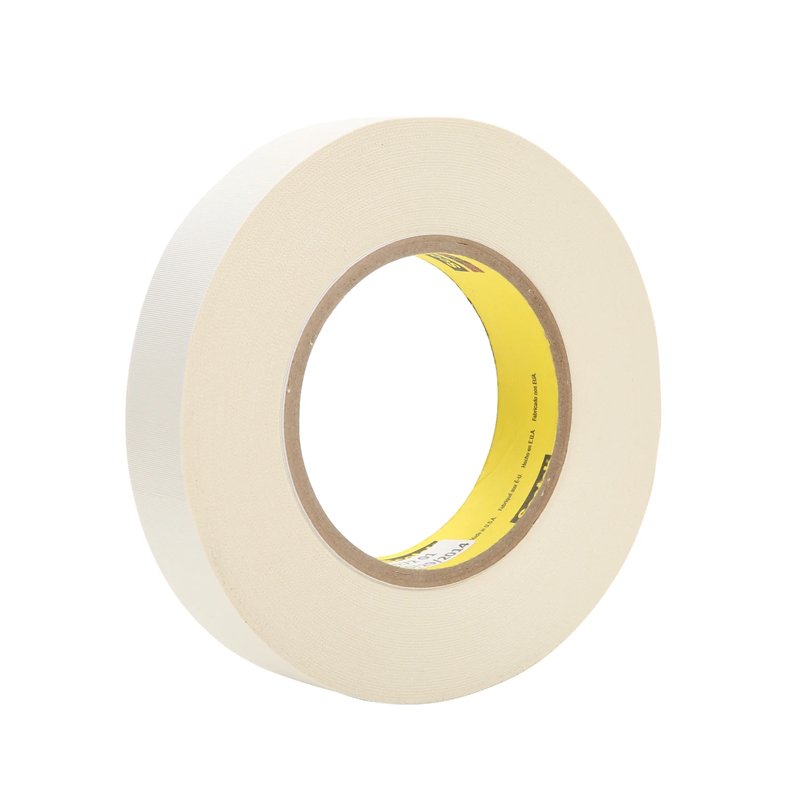
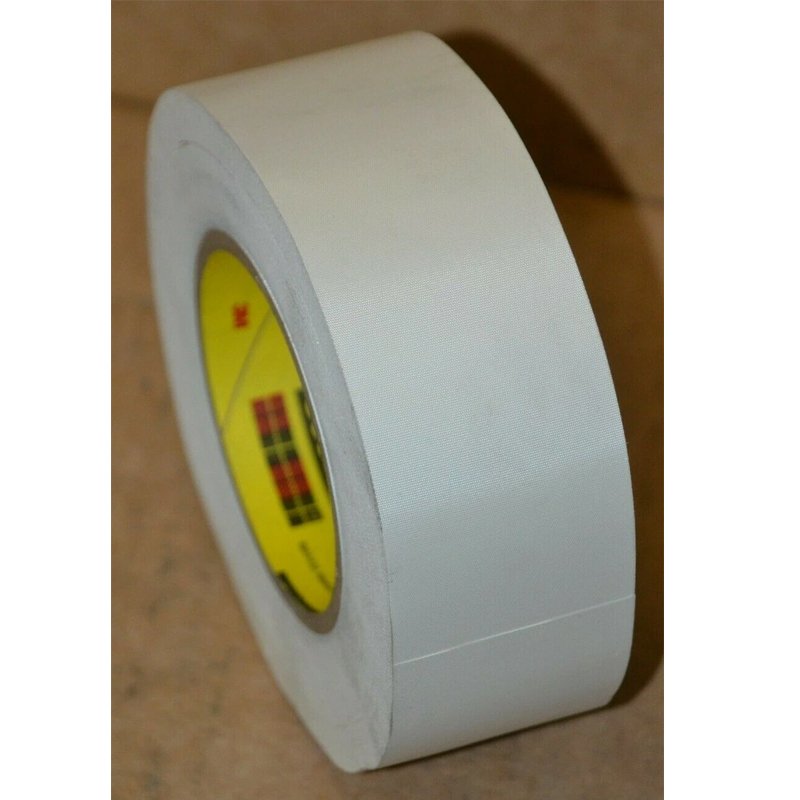
| Backing | Glass Cloth |
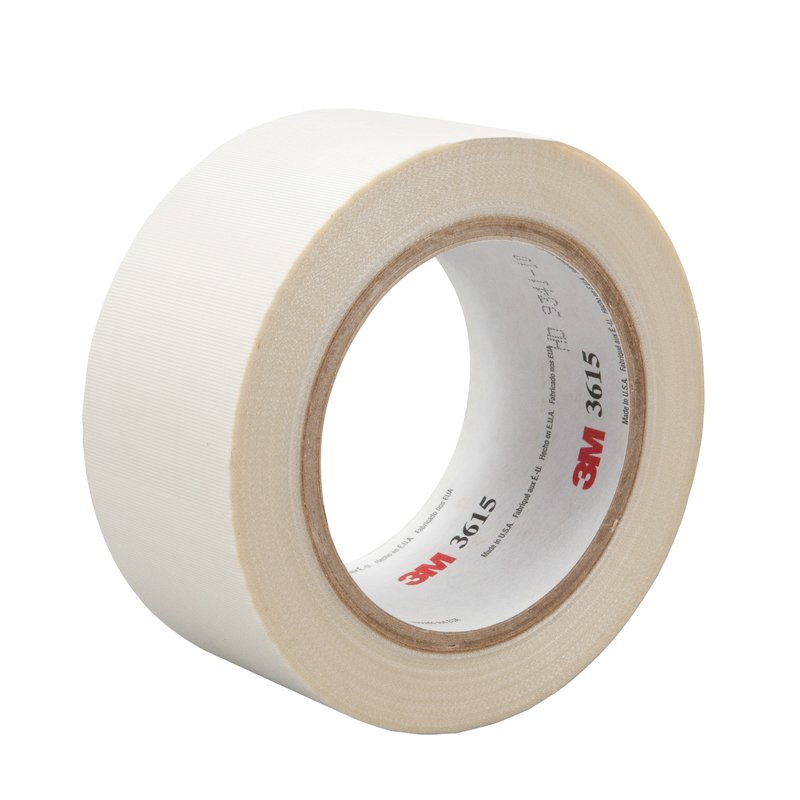
| Color | White |
| Backing Thickness | 0.12 mm (4.8 mil) |
| Total Tape Thickness | 0.20 mm (8.3 mil) |
| 180° Peel Adhesion | 5.7 N/cm (52 oz/in) |
| Tensile Strength | 243 N/cm (139 lb/in) |
| Elongation at Break | 7% |
| Temperature Range | Approx. 4°C to 232°C |
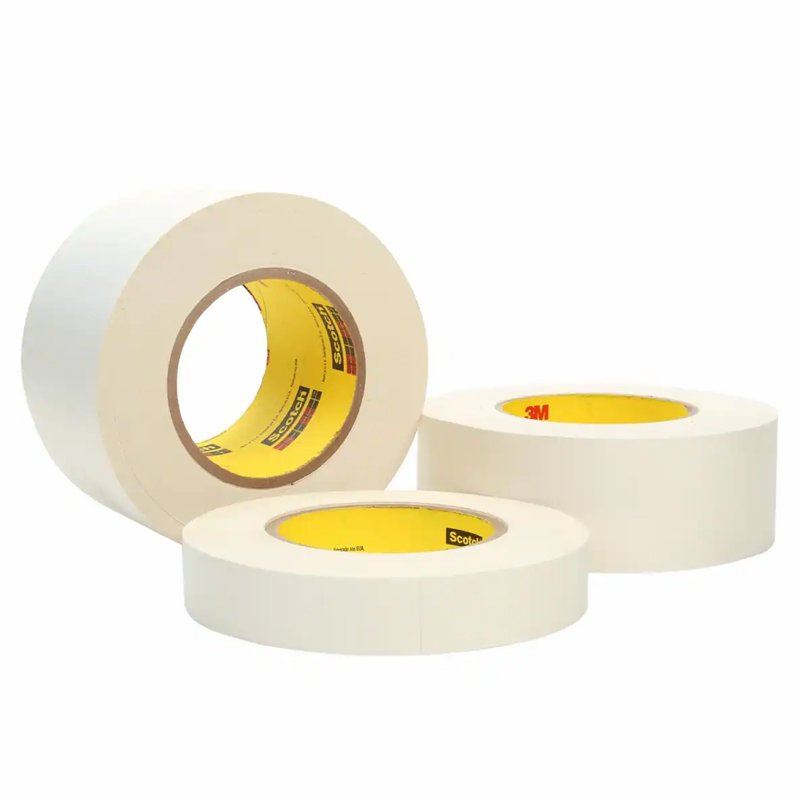
| Standard Roll Length | 55 m (60 yd) |
| Standard Widths | 13, 19, 25, 50, 75, 100, 125 mm |
| Adhesive Cure | Thermosetting / heat activation |
The published physical and performance values are typical values and should not be used as product specifications without confirming the latest applicable 3M documentation.
How Does 3M™ Thermosetable Glass Cloth Tape 365 Work?
The tape has two important performance stages.
Stage 1: Initial Application
The thermosetable rubber-resin adhesive provides:
Good initial tack → Easy positioning → Initial adhesion
This allows the tape to be applied and positioned before the thermosetting process.
Stage 2: Thermosetting
After application, heat is applied to the tape. The adhesive crosslinks during the thermosetting cycle.
The result is:
Heat → Crosslinking → Higher adhesion → Greater bond strength → Improved heat and solvent resistance
3M notes that the final bond depends on optimizing the time, temperature, and pressure used during the heat-treatment process.
Applications
1. High-Temperature Splicing
3M™ Thermosetable Glass Cloth Tape 365 is designed for splicing applications requiring high tensile strength at elevated temperatures.
2. Roofing Felt Splicing
The strong glass cloth construction is suitable for splicing materials with rough surfaces or relatively low internal strength, including roofing felt.
3. Fiberglass Splicing
The tape can be used to join or reinforce fiberglass materials where high tensile strength and temperature resistance are required.
4. Textile Splicing
Its conformable glass cloth backing and high-strength adhesive system make it suitable for selected textile splicing applications.
5. Hot-Air Duct Wrapping
3M recommends Tape 365 as a corrosion-resistant wrap on stainless-steel hot-air ducts.
6. High-Temperature Insulation
The tape can be used for selected insulation and electrical applications requiring high tensile strength at elevated temperatures.
7. Industrial Reinforcement
Its high tensile-strength glass cloth backing makes it suitable for reinforcing seams, joints, and other industrial structures.
Compatible Materials
3M™ Thermosetable Glass Cloth Tape 365 can be considered for applications involving:
- Stainless steel
- Steel
- Aluminum
- Fiberglass
- Roofing felt
- Textiles
- Insulation materials
- Industrial fabrics
- Composite materials
- Rough or porous surfaces
- Low-internal-strength materials
For critical applications, substrate compatibility should be evaluated under actual temperature, pressure, surface condition, and thermosetting-cycle conditions.
Industries
3M™ Thermosetable Glass Cloth Tape 365 is suitable for applications across:
- Industrial Manufacturing
- Roofing & Construction
- HVAC
- Electrical & Electronics
- Fiberglass Manufacturing
- Textile Manufacturing
- Automotive
- Aerospace
- Appliance Manufacturing
- Industrial Equipment
- Maintenance & Repair
- Transportation
3M also lists Thermosetable Glass Cloth Tape 365 among its cloth tape products for commercial and specialty vehicle applications.
Why Choose 3M™ Thermosetable Glass Cloth Tape 365?
3M™ Thermosetable Glass Cloth Tape 365 is a strong choice when an application requires high adhesion combined with high tensile strength and elevated-temperature performance.
Its major advantages include:
- Thermosetable adhesive technology
- High initial tack
- Stronger bond after heat treatment
- High tensile strength
- Good solvent resistance
- High-temperature capability
- Durable glass cloth backing
- Good abrasion and puncture resistance
- Good dimensional stability
- Suitable for rough and difficult-to-splice materials
For applications where the bond must become stronger after heating, its thermosetable adhesive construction provides an advantage over conventional pressure-sensitive glass cloth tapes.
3M™ 365 vs. 3M™ 3650
An important related product is 3M™ Thermosetable Glass Cloth Tape 3650.
The primary difference is the liner construction:
- 3M™ 365: standard version
- 3M™ 3650: poly-linered version
3M describes 3650 as the poly-linered version of 365 and specifically notes that it is an ideal choice for die-cut applications.
This distinction is particularly useful for manufacturers purchasing glass cloth tape for precision converting, die-cutting, or custom-shaped parts.
Installation Guide
Step 1: Prepare the Surface
Clean the application surface thoroughly. Remove dust, oil, grease, moisture, and other contaminants.
Step 2: Cut the Tape
Cut the required length according to the application.
Step 3: Apply the Tape
Position the tape carefully and apply it smoothly. Avoid wrinkles and trapped air.
Step 4: Apply Pressure
Apply firm and even pressure to ensure good initial contact between the adhesive and substrate.
Step 5: Apply Heat
Use the appropriate thermosetting method, such as heating or ironing the tape backing.
Step 6: Optimize the Cure
The thermosetting result depends on the combination of temperature, time, and pressure. Follow the application parameters established for the specific process.
Step 7: Inspect the Bond
After the thermosetting cycle, allow the assembly to reach the appropriate handling condition and inspect the bond for lifting, wrinkles, gaps, or incomplete contact.
Storage
Store 3M™ Thermosetable Glass Cloth Tape 365:
- In the original packaging
- At 16–27°C (60–80°F)
- At 40–60% relative humidity
- Away from direct sunlight
- In a clean and dry environment
- Away from chemicals and contaminants
3M recommends using the product within 18 months from the date of manufacture for best performance when stored under the specified conditions.
FAQ
What is 3M™ Thermosetable Glass Cloth Tape 365?
It is a glass cloth tape with a thermosetable rubber-resin adhesive designed for applications requiring high adhesion, high tensile strength, and elevated-temperature performance.
What does “thermosetable” mean?
It means the adhesive crosslinks when exposed to a thermosetting cycle. Heating the applied tape can increase its adhesion and bond strength while improving heat and solvent resistance.
What temperature can 3M™ Glass Cloth Tape 365 withstand?
3M lists a temperature range of approximately 4°C to 232°C (40°F to 450°F). Actual performance depends on the application and thermosetting conditions.
Is 3M™ 365 suitable for high-temperature splicing?
Yes. High-temperature splicing is one of its intended application areas, particularly where high tensile strength is required.
Can 3M™ 365 be used on rough surfaces?
Yes. 3M specifically identifies applications involving rough surfaces and materials with low internal strength, including roofing felt, fiberglass, and textiles.
Is 3M™ 365 solvent resistant?
The product provides good solvent resistance, and the thermosetting process further improves the bond’s resistance to solvents.
Can 3M™ 365 be die-cut?
For applications requiring a linered construction for easier converting, 3M™ Thermosetable Glass Cloth Tape 3650 is the related linered version and is specifically described by 3M as an ideal choice for die-cut applications.
What is the difference between 3M 365 and 3650?
3M 3650 is the poly-linered version of 3M 365. The liner can make 3650 more suitable for converting and die-cutting applications.
What widths are available?
3M lists standard widths of 13, 19, 25, 50, 75, 100, and 125 mm, with a standard roll length of 55 m (60 yd) in the referenced technical documentation. Availability can vary by market.
Downloads
Available upon request:
- 3M Thermosetable Glass Cloth Tape 365 Technical Data Sheet (TDS)
- Safety Data Sheet (SDS)
- Adhesive Tape Selection Guide
- Product Brochure
- Die-Cutting Capability Guide
Please contact our sales team if you require the latest technical documentation.