Benefits
Excellent Conformability
The soft lead foil backing can conform closely to curved and irregular surfaces. For electroplating applications, 3M recommends smoothing or “feathering” the edges to improve contact between the tape and the metal substrate.
Electrical and Thermal Conductivity
3M™ Lead Foil Tape 421 is both electrically and thermally conductive, making it suitable for applications where a conductive metallic tape construction is required.
Chemical Process Masking
The tape is designed for selected industrial processes including electroplating and chemical milling. Specific chemical concentration, temperature and exposure time should be evaluated before production use.
Radiation and X-Ray Applications
3M identifies radiation barrier and X-ray plate masking among the product’s application examples. Actual shielding effectiveness depends on the radiation source, energy, thickness and system design.
Custom Die-Cutting
The tape can be converted into custom shapes for assembly and manufacturing requirements, making it suitable for applications that require patterned masking or specially shaped conductive components.
Technical Specifications
| Property | 3M™ Lead Foil Tape 421 |
|---|---|
| Product type | Lead foil tape |
| Backing | Lead foil |
| Adhesive type | Rubber |
| Adhesive color | Green |
| Tape color | Dark silver |
| Backing thickness | 0.10 mm / 4 mil |
| Total tape thickness | 0.17 mm / 6.6 mil |
| 180° peel adhesion to steel | 4.9 N/cm at 23°C |
| Tensile strength | 26.3 N/cm |
| Elongation at break | 14% |
| Long-term temperature resistance | 107°C / 225°F |
| Minimum long-term temperature resistance | -51°C / -60°F |
| Water vapor transmission | 1.55 g/m²/24 h |
| Standard roll length | 33 m / 36 yd |
| Electrical conductivity | Yes |
| Thermal conductivity | Yes |
Applications
Electroplating Masking
3M™ Lead Foil Tape 421 can be used for selected electroplating masking applications. Its conductive lead foil construction can be useful where the tape needs to maintain contact with the metal substrate.
3M specifically notes that feathering the tape edges is especially important when it is used as a “thief” in electroplating, so the edges fully contact the metal base.
Radiation Barrier
The dense lead foil construction can be considered for selected radiation-barrier applications. Shielding performance must be determined according to the specific radiation source and application design.
Moisture Barrier
3M lists moisture barrier as an application example for 3M™ Lead Foil Tape 421.
Chemical Milling
The tape can be used for selected chemical milling masking processes. The specific chemistry, concentration, temperature and exposure duration should be validated before production.
X-Ray Plate Masking
3M identifies X-ray plate masking as one of the product’s application examples.
Compatible Materials
3M™ Lead Foil Tape 421 can be evaluated on a range of industrial substrates, particularly where adhesion to metal surfaces is required.
Potential substrates include:
- Stainless steel
- Aluminum
- Steel
- Copper and other metals
- Selected industrial plastics
- Other surfaces compatible with the rubber-based adhesive
The substrate should be clean and dry, and 3M recommends application above 0°C (32°F) for best results.
Industries
3M™ Lead Foil Tape 421 may be used in:
- Electroplating
- Metal Finishing
- Chemical Processing
- Chemical Milling
- Radiation Protection
- X-Ray Equipment
- Electronics and Electrical Equipment
- Industrial Manufacturing
- Specialty Assembly
For critical applications, suitability should be established through application-specific testing and applicable safety requirements.
Why Choose 3M™ Lead Foil Tape 421?
3M™ 421 combines a flexible lead foil backing, rubber adhesive, electrical conductivity and thermal conductivity in a relatively thin tape construction.
Its key advantages include:
- Highly conformable lead foil
- Conductive metallic construction
- Resistance to moisture, weather and UV degradation
- Resistance to many chemicals
- Wide operating-temperature capability
- Support for electroplating and chemical milling masking
- Radiation-barrier and X-ray masking applications
- Custom die-cut capability
For industrial customers, custom slitting, laminating and precision die-cutting can be evaluated according to finished dimensions, tolerances and processing requirements.
Installation Guide
1. Prepare the Surface
Apply the tape to a clean, dry surface free from dust, oil, grease and other contamination. 3M recommends application above 0°C (32°F) for best results.
2. Position the Tape
Remove the protective handling material as applicable and place the tape onto the required masking, conductive or barrier area.
3. Apply Uniform Pressure
Press the tape firmly and evenly against the substrate to establish intimate contact.
4. Feather the Edges
For electroplating applications, rub the tape edges down with a smooth-edged plastic tool or similar implement so the lead foil conforms closely to the metal surface.
5. Check Contact
For applications requiring conductivity or process masking, inspect the tape edges and contact areas before starting the production process.
6. Validate the Application
For electroplating, chemical milling, radiation or other critical applications, validate the complete tape/substrate/process combination before production release.
Storage
Store 3M™ Lead Foil Tape 421:
- At 16–27°C (60–80°F)
- At 40–60% relative humidity
- In the original packaging
- Away from direct sunlight
3M recommends using the product within 18 months from the date of manufacture for best performance.
FAQ
What is 3M™ Lead Foil Tape 421?
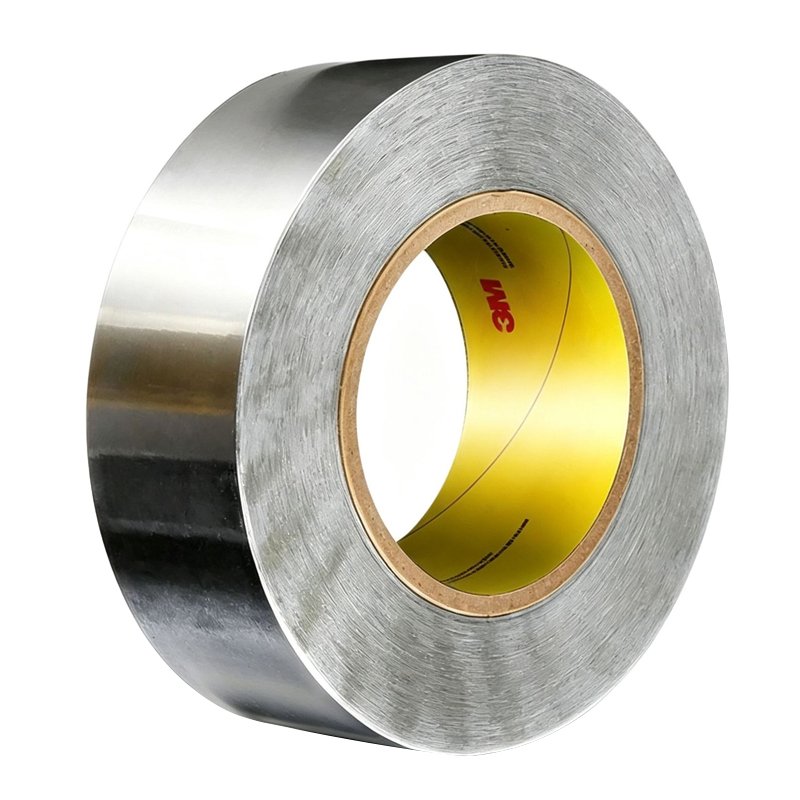
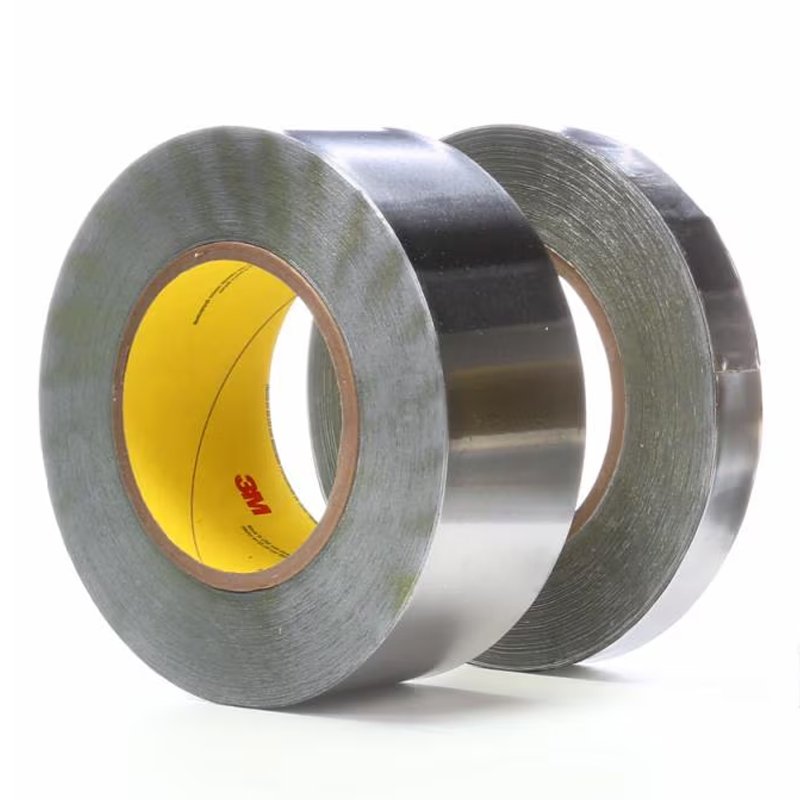
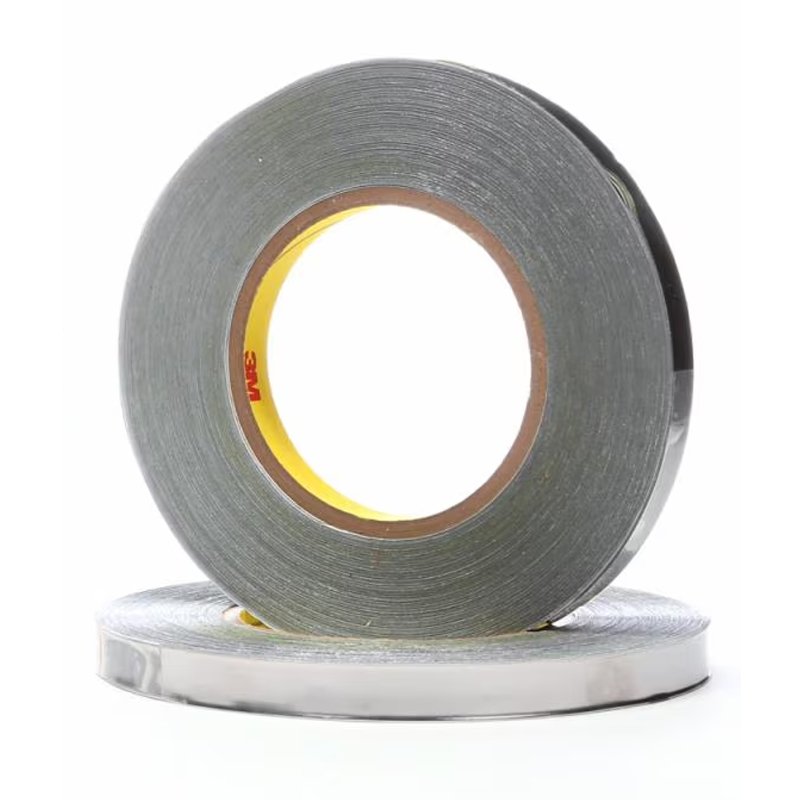
3M™ Lead Foil Tape 421 is a lead foil tape with a rubber adhesive designed for conformable conductive, masking, moisture-barrier and selected radiation-related industrial applications.
Is 3M™ 421 electrically conductive?
Yes. 3M specifies 421 as electrically conductive.
Is 3M™ 421 thermally conductive?
Yes. The product is also thermally conductive.
What is the thickness of 3M™ Lead Foil Tape 421?
The latest September 2024 TDS lists a total tape thickness of approximately 0.17 mm (6.6 mil) and a lead foil backing thickness of 0.10 mm (4 mil).
What is the temperature range of 3M™ 421?
The current TDS lists a long-term temperature resistance range from approximately -51°C to 107°C (-60°F to 225°F).
Can 3M™ 421 be used for electroplating?
Yes. Electroplating is one of the product’s listed application examples.
Can 3M™ 421 be used for chemical milling?
Yes. 3M lists chemical milling as an application example. The actual chemical system must be tested before use.
Can 3M™ 421 be used as a radiation shielding tape?
3M lists radiation barrier and X-ray plate masking as application examples. However, required shielding performance must be calculated and validated for the actual radiation conditions.
Can 3M™ 421 be die-cut?
Yes. 3M states that the material can be die-cut into specific shapes for assembly and manufacturing processes.
Is 3M™ 421 suitable for outdoor use?
3M describes 421 as conformable and resistant to moisture, weather and UV degradation, with use across a variety of indoor and outdoor conditions.
Does 3M™ 421 contain lead?
Yes. The backing is lead foil. Because lead exposure and disposal are regulated, appropriate protective equipment, workplace controls and applicable disposal regulations must be followed. 3M specifically warns that lead can transfer to hands and that separately disposed material is classified as RCRA hazardous waste in the U.S.
Is 3M™ 421 suitable for consumer applications?
3M identifies this product as an industrial/occupational-use product, not a consumer product.
Downloads
Available upon request:
- 3M™ Lead Foil Tape 421 Technical Data Sheet (TDS)
- Safety Data Sheet (SDS)
- Adhesive Tape Selection Guide
- Product Brochure
- Die-Cutting Capability Guide
Please contact our sales team if you require the latest technical documentation.