
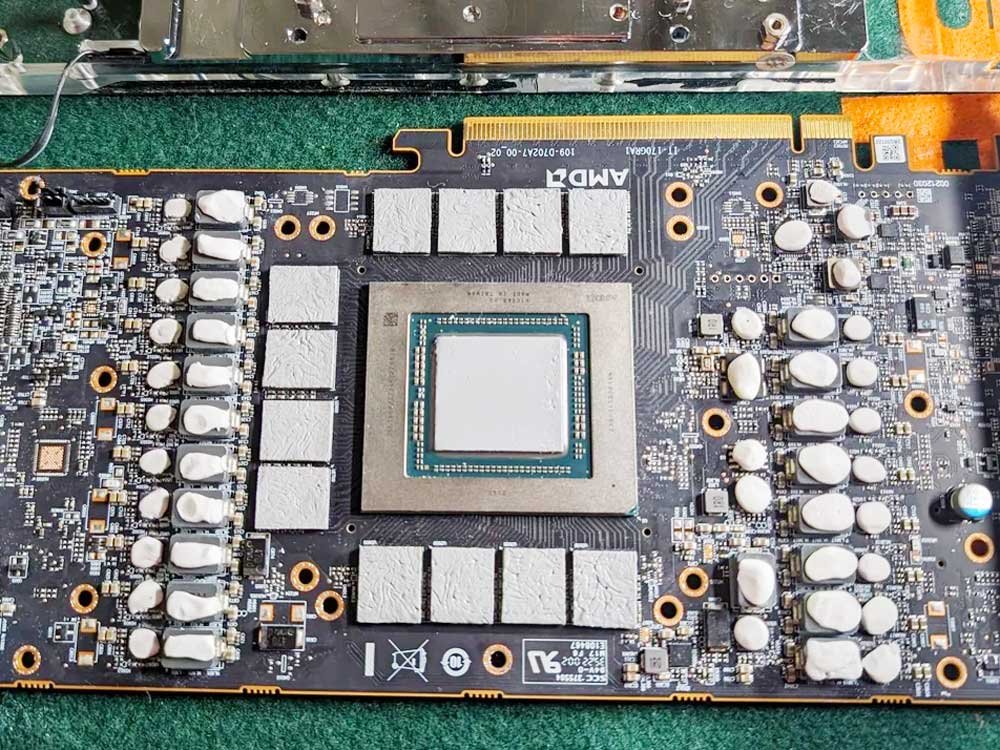
As electronic devices become smaller, faster, and more powerful, thermal management has become a critical challenge. One solution that is working exceptionally well across electronics, automotive, and telecom industries is the phase change thermal pad. Designed to deliver low thermal resistance and excellent surface wetting, phase change thermal pads are proving to be a highly reliable alternative to traditional thermal interface materials.
What Is a Phase Change Thermal Pad?
A phase change thermal pad (PCM thermal pad) is a solid thermal interface material that softens or melts at a specific temperature—typically between 45°C and 65°C. Below this temperature, it remains solid and clean to handle. Once the device heats up during operation, the material transitions into a semi-liquid state, filling microscopic air gaps between surfaces such as heat sinks and electronic components.
This phase transition significantly improves thermal contact, allowing heat to transfer more efficiently.
How Phase Change Thermal Pads Work
Phase change thermal pads work by combining the advantages of solid pads and thermal greases:
- At room temperature, the pad is dry, tack-free, and easy to install
- When operating temperature is reached, the pad softens and flows
- It conforms to uneven surfaces, eliminating air gaps
- Heat is transferred efficiently from the heat source to the heat sink
Because air is a poor conductor of heat, removing trapped air dramatically improves thermal performance.
Why Phase Change Thermal Pads Are Working So Well
Phase change thermal pads are widely adopted because they offer several key benefits:
- Low thermal resistance after phase transition
- Stable thermal conductivity (typically 1.5–5.0 W/m·K)
- No pump-out or dry-out issues, unlike thermal grease
- No pump-out or dry-out issues, unlike thermal grease
- Consistent performance over long service life
These advantages make them especially suitable for high-volume manufacturing and mission-critical electronics.
Typical Applications of Phase Change Thermal Pads
Phase change thermal pads are working great in many demanding applications, including:
- CPUs, GPUs, and power modules
- Automotive ECUs and battery systems
- 5G base stations and RF modules
- LED lighting and power supplies
- Consumer electronics and industrial controllers
Their reliability under thermal cycling makes them ideal for both consumer and industrial environments.
Phase Change Thermal Pads vs Traditional Thermal Materials
Compared to thermal grease, phase change pads are cleaner, easier to handle, and more consistent. Compared to standard silicone thermal pads, they provide lower contact resistance once activated. This balance of performance and process control explains why more engineers are choosing PCM thermal pads.
Conclusion
If you’re looking for a thermal interface material that is easy to apply, production-friendly, and delivers excellent heat transfer, a phase change thermal pad is a proven solution. With reliable phase transition behavior and strong thermal performance, phase change thermal pads are truly working great for modern thermal management challenges.
Need help developing your phase change material or thermal interface material solutions? Contact Yousan today to start your custom project.
If you would like to learn more about Yousan adhesive tapes, please visit our website at www.ysdiecut.com