
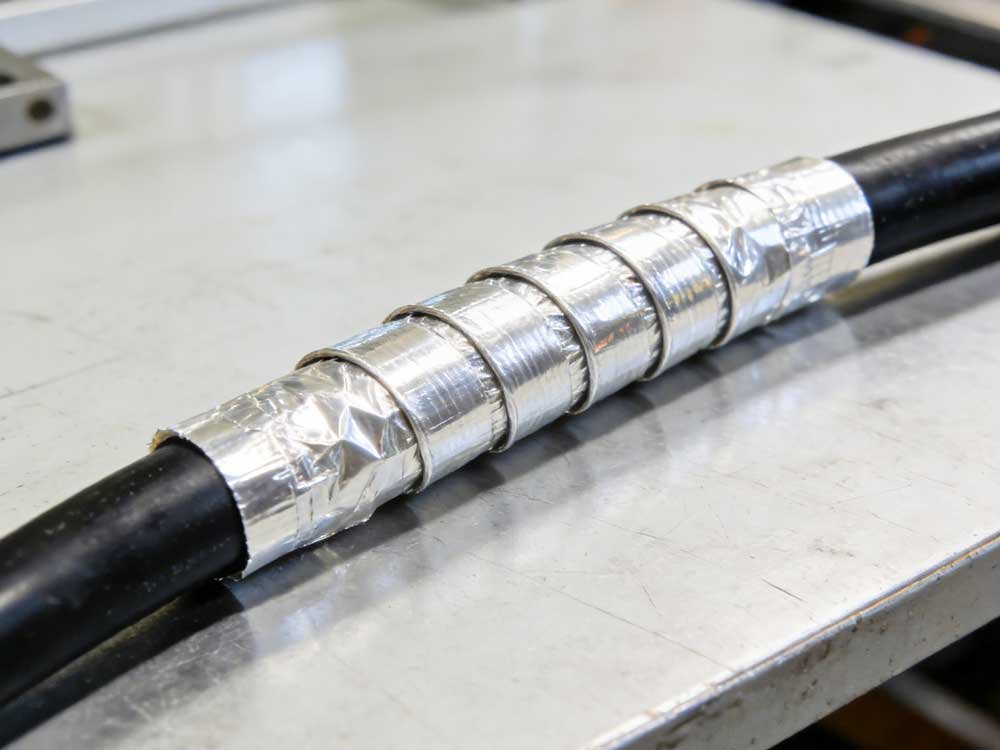
When selecting conductive or shielding materials, many buyers ask: Can aluminum foil tape replace copper tape? Although both are metallic tapes widely used in electronics, HVAC, and industrial applications, they are not the same in performance, conductivity, or use cases.
This article explains the key differences between aluminum foil tape and copper tape, helping you choose the right solution for your application.
1. Material & Electrical Conductivity
Copper tape offers significantly higher electrical conductivity than aluminum.
- Copper conductivity: ~58 MS/m
- Aluminum conductivity: ~37 MS/m
Result:
Copper tape is far more suitable for:
- EMI/RFI shielding
- Grounding and electrical connections
- PCB repairs and electronics prototyping
Aluminum foil tape, unless specially treated, cannot conduct through the adhesive, limiting its effectiveness in electrical grounding.
2. Adhesive Conductivity
This is a critical difference.
- Copper tape can be supplied with conductive adhesive, allowing current to pass through overlapping layers.
- Aluminum foil tape usually uses non-conductive acrylic adhesive.
Implication:
If your application requires:
- Electrical continuity
- Reliable grounding
- Low contact resistance
Copper tape is the correct choice.
3. EMI & RFI Shielding Performance
Both tapes are used for electromagnetic shielding, but performance differs:
| Property | Copper Tape | Aluminum Foil Tape |
|---|---|---|
| EMI shielding | Excellent | Good |
| Low-frequency shielding | Excellent | Limited |
| High-frequency shielding | Excellent | Good |
| Conductive bonding | Yes | No (usually) |
Aluminum foil tape works well for basic EMI shielding, but copper tape is preferred for high-precision electronics.
4. Corrosion Resistance & Durability
- Copper tape may oxidize over time but remains conductive.
- Aluminum foil tape has excellent corrosion resistance and moisture barrier properties.
Aluminum foil tape is often chosen for:
- HVAC duct sealing
- Thermal insulation systems
- Moisture and vapor barriers
5. Thermal Performance
Aluminum foil tape excels in heat reflection and insulation.
- High thermal reflectivity
- Good performance in HVAC and insulation applications
Copper tape can tolerate heat but is not primarily used for thermal insulation.
6. Cost Consideration
- Aluminum foil tape: More economical, widely used for large-area coverage
- Copper tape: Higher cost, used where performance matters
If budget is a key concern and electrical conductivity is not required, aluminum foil tape is a practical alternative.
7. Typical Applications Comparison
Copper Tape Applications
- EMI/RFI shielding
- Grounding and earthing
- PCB and circuit repairs
- Automotive electronics
- Medical and aerospace electronics
Aluminum Foil Tape Applications
- HVAC duct sealing
- Thermal insulation
- Reflective heat shielding
- Moisture and vapor barriers
- General industrial sealing
Conclusion: Are They the Same?
No — aluminum foil tape does not work the same as copper tape.
- Choose copper tape for electrical conductivity, grounding, and high-performance EMI shielding.
- Choose aluminum foil tape for insulation, sealing, and cost-effective shielding where conductivity is not critical.
Need help developing your aluminum foil tape or copper tape solutions? Contact Yousan today to start your custom project.
If you would like to learn more about Yousan adhesive tapes, please visit our website at www.ysdiecut.com