
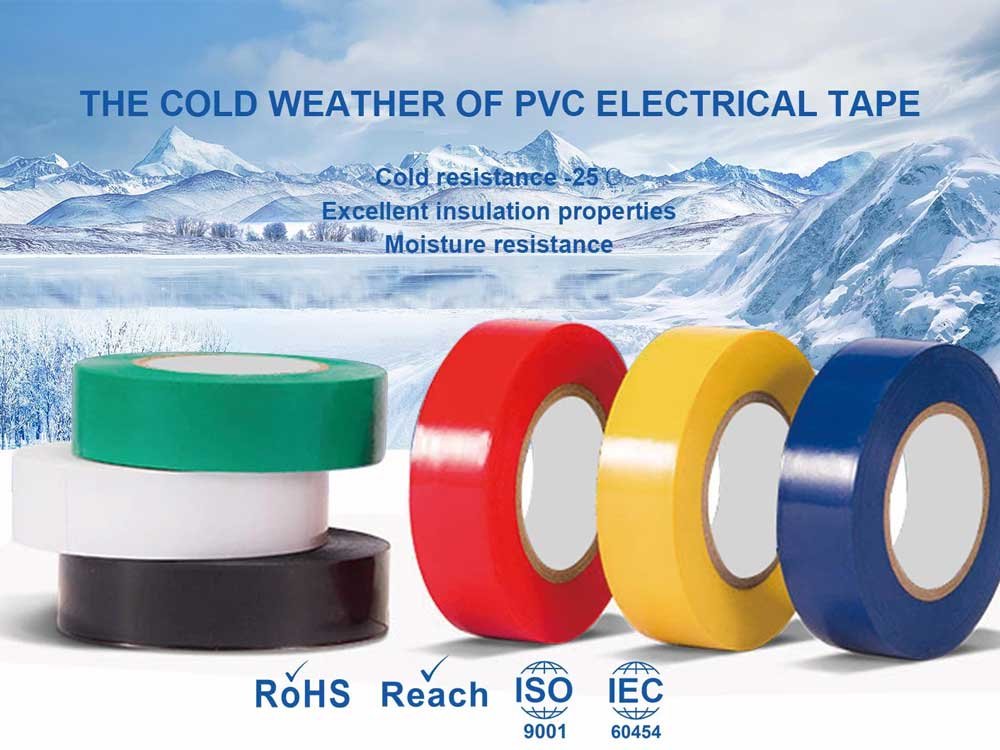
Cold weather creates serious performance challenges for industrial adhesive tapes. In the United States and across the European Union, winter temperatures regularly drop below freezing — especially in regions such as the Midwest US, Northern Europe, Germany, Poland, and Scandinavia.
If your facility operates in unheated warehouses, outdoor construction sites, cold storage rooms, or winter transportation environments, you may experience:
- Sudden bond failure
- Tape lifting from metal or plastic
- Reduced shear strength
- Cracking or brittle backing
- Costly rework and warranty claims
Understanding why industrial adhesive tapes fail in cold weather is essential for procurement managers, engineers, and production teams who need reliable bonding performance year-round.
1. The Science Behind Cold Weather Tape Failure
Industrial adhesive tapes are typically based on pressure-sensitive adhesive (PSA) technology. Unlike mechanical fasteners, PSAs rely on:
- Surface wet-out
- Molecular flexibility
- Interfacial bonding
- Viscoelastic behavior
Cold temperatures disrupt all of these mechanisms.
1.1 Glass Transition Temperature (Tg)
Every adhesive polymer has a Glass Transition Temperature (Tg). Below Tg:
- Polymer chains lose mobility
- Adhesive becomes hard and glass-like
- Surface wet-out becomes minimal
- Initial tack drops significantly
For many standard acrylic industrial tapes, Tg can range between 0°C and 10°C (32–50°F). That means performance declines rapidly in cold US Midwest winters or EU outdoor installations.
1.2 Reduced Surface Wet-Out
Adhesives must flow into microscopic irregularities of the substrate surface. In cold environments:
- Adhesive becomes stiff
- Flow into micro-pores is reduced
- Contact area decreases
- Bond strength weakens
This is particularly critical when bonding to:
- Powder-coated metals
- Aluminum panels
- Low surface energy plastics (PP, PE)
- Galvanized steel
1.3 Substrate Temperature vs Air Temperature
One common mistake in US and EU warehouses is assuming room temperature equals surface temperature. In reality:
- Metal parts may remain below 0°C even if air is 5°C
- Outdoor-stored materials absorb cold overnight
- Condensation or frost may be invisible
Adhesive applied to a 0°C steel panel will behave very differently than applied to a 20°C panel — even if the tape itself was stored warm.
2. How Different Adhesive Types Perform in Cold Weather
Not all industrial tapes are equal. Understanding adhesive chemistry is essential for buyers targeting US and EU winter markets.
| Adhesive Type | Cold Application | Cold Service | Typical Usage |
|---|---|---|---|
| Water-Based Acrylic | Poor below 10°C | Moderate | General industrial |
| Hot Melt Rubber | Moderate | Fair | Packaging, light duty |
| Solvent Acrylic | Good | Very good | Automotive, construction |
| Synthetic Rubber | High initial tack | Can age in cold | HVAC |
| Silicone | Excellent | Extreme temp resistance | Aerospace, electronics |
For US northern states and EU export markets, solvent acrylic or cold-modified rubber systems are typically recommended.
3. Backing Material Problems in Cold Conditions
Industrial tapes consist of two main components:
- Adhesive
- Backing/carrier
Cold temperatures affect both.
3.1 Film Backings (BOPP, PVC, PET)
In freezing temperatures:
- Flexibility decreases
- Elongation reduces
- Film can crack under tension
PVC electrical tapes used in outdoor EU installations often lose conformability below -5°C.
3.2 Foam Tapes
Foam carriers (PE, PU, acrylic foam):
- Shrink slightly in cold
- Increase internal stress
- May cause edge lifting
In structural bonding applications, thermal contraction mismatch between substrate and foam can create stress at the bond line.
4. Industry-Specific Cold Weather Risks
Automotive Manufacturing (US & EU), Cold workshops may experience:
- Badge or trim detachment
- Interior component lifting
- Reduced bonding strength during assembly
HVAC & Construction, Outdoor duct sealing or insulation installation in winter can lead to:
- Tape peeling within days
- Reduced moisture barrier integrity
- Warranty claims
Electronics & Equipment Assembly, In temperature-sensitive environments:
- Insulation tapes may stiffen
- Wire harness wrapping becomes difficult
- Adhesive migration slows
5. How to Prevent Industrial Tape Failure in Cold Weather
Now let’s focus on solutions.
5.1 Use Cold-Weather Rated Industrial Tape
Look for specifications that clearly state:
- Minimum application temperature (0°C or below)
- Service temperature down to -20°C or lower
- Tested performance under ASTM or EN standards
For US markets, ensure compliance with relevant ASTM testing methods. For EU markets, confirm conformity with EN and REACH requirements.
5.2 Control Storage Conditions
Best practice guidelines:
- Store tapes at 18–22°C (65–72°F)
- Keep away from cold concrete floors
- Allow 24 hours acclimation before use
- Avoid long-term storage below 10°C
Proper storage alone can improve winter bonding success rates by over 30%.
5.3 Warm the Substrate
Before application:
- Move parts into heated zones
- Use portable heaters for outdoor projects
- Ensure substrate temperature is above minimum spec
Even raising surface temperature from 0°C to 10°C can dramatically improve adhesion.
5.4 Increase Application Pressure
Cold adhesives require:
- Higher application pressure
- Use of rollers or automated laminators
- Uniform contact across entire bonding area
Pressure enhances surface wet-out when adhesive flow is reduced.
5.5 Extend Dwell Time Before Load
In cold conditions:
- Adhesive builds strength more slowly
- Immediate load application may cause failure
Allow extended dwell time before applying stress.
5.6 Upgrade Adhesive Chemistry
For critical US and EU industrial applications:
- Switch from water-based acrylic to solvent acrylic
- Consider cold-modified rubber adhesives
- For extreme environments, evaluate silicone-based systems
Upgrading adhesive chemistry often reduces long-term maintenance costs.
6. Regulatory Considerations for US & EU Markets
Industrial tape supplied to US and EU customers must often meet:
- REACH compliance (EU)
- RoHS requirements
- VOC limitations
- Fire resistance standards (UL, EN classifications)
Cold-weather modifications must still comply with regional chemical regulations.
7. Cost Impact of Cold Weather Failure
Industrial tape failure in winter can result in:
- Production downtime
- Product recalls
- Rework labor costs
- Transportation damage
- Brand reputation loss
Selecting the correct cold-weather industrial adhesive tape is not just a technical decision — it is a risk management strategy.
Conclusion
Industrial adhesive tape failure in cold weather is typically not a manufacturing defect — it is a temperature compatibility issue. For US and EU industrial buyers, winter performance must be engineered into the specification from the beginning.
If your industrial tape struggles below 10°C (50°F), it is time to evaluate a cold-weather optimized solution designed for US and EU market demands.
Need help developing your Industrial Adhesive Tape solutions? Contact Yousan today to start your custom project.
If you would like to learn more about Yousan adhesive tapes, please visit our website at www.ysdiecut.com