
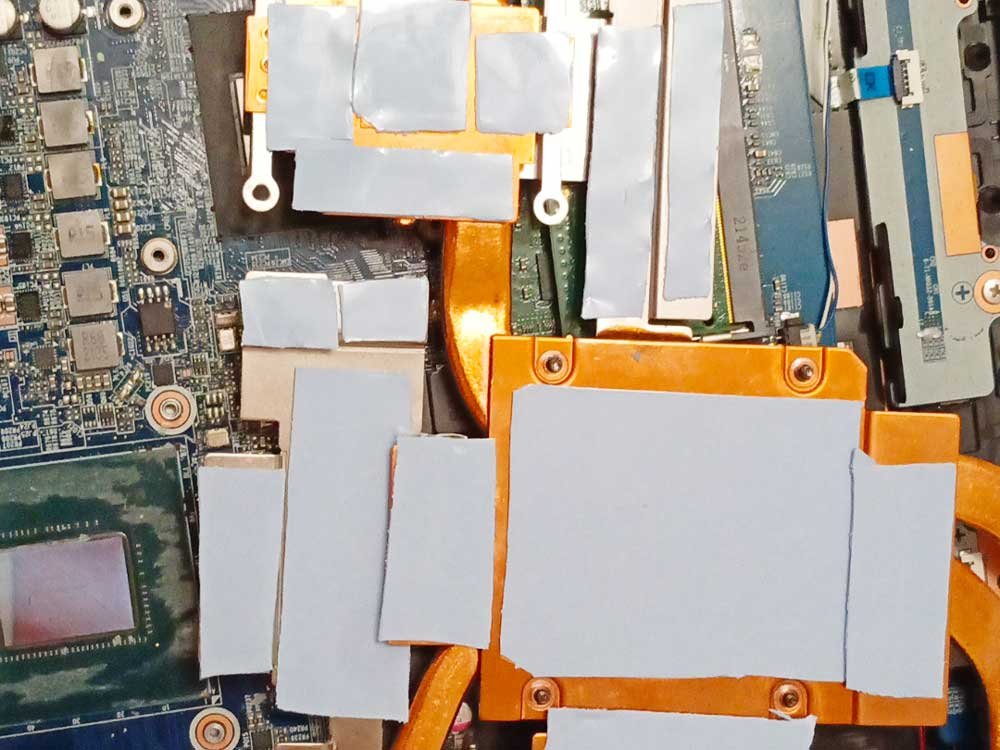
Effective thermal management is critical in modern electronics. As devices become smaller and more powerful, excess heat can reduce performance, shorten lifespan, and even cause failure. One widely used solution is the silicone thermal pad—but does it really make a difference?
What Is a Silicone Thermal Pad?
A silicone thermal pad is a soft, compressible material designed to transfer heat between heat-generating components (like CPUs, power modules, or LEDs) and heat sinks or enclosures. It typically consists of:
- A silicone base material
- Thermally conductive fillers (such as ceramic particles)
This combination allows the pad to bridge air gaps and improve heat conduction.
Why Thermal Control Matters
Electronic components generate heat during operation. Without proper dissipation:
- Performance may drop due to thermal throttling
- Components can degrade faster
- Reliability and safety may be compromised
Efficient thermal control ensures stable operation, longer lifespan, and better product performance.
How Silicone Thermal Pads Improve Heat Dissipation
1. Filling Air Gaps for Better Contact
Air is a poor conductor of heat. Even smooth surfaces have microscopic gaps. Silicone thermal pads conform to surface irregularities, eliminating air pockets and improving thermal transfer.
2. Providing Consistent Thermal Conductivity
Unlike thermal grease, which can pump out or dry over time, thermal pads offer stable and consistent performance throughout their service life.
3. Easy Installation and Clean Application
Silicone thermal pads are:
- Pre-cut or die-cut
- Easy to apply
- Clean and mess-free
This reduces assembly time and improves production efficiency.
4. Electrical Insulation and Safety
Most silicone thermal pads provide excellent electrical insulation, making them suitable for sensitive electronic applications.
5. Vibration Absorption and Gap Bridging
Thanks to their softness and elasticity, thermal pads can:
- Absorb mechanical stress
- Maintain contact under vibration
This is especially important in automotive and industrial environments.
Applications of Silicone Thermal Pads
Silicone thermal pads are widely used in:
- Consumer electronics (smartphones, laptops)
- LED lighting systems
- Power supplies and converters
- Automotive electronics
- Telecom and 5G equipment
They are ideal wherever reliable heat transfer and insulation are required.
Silicone Thermal Pads vs Thermal Paste
| Feature | Thermal Pad | Thermal Paste |
|---|---|---|
| Application | Easy | Messy |
| Reusability | Limited | No |
| Consistency | Stable | May dry out |
| Gap Filling | Excellent | Limited |
| Automation | Suitable | Difficult |
Thermal pads are better for mass production and gap filling, while thermal paste is preferred for ultra-thin interfaces.
How to Choose the Right Silicone Thermal Pad
When selecting a thermal pad, consider:
- Thermal conductivity (W/m·K)
- Thickness and compressibility
- Operating temperature range
- Surface gap size
- Electrical insulation requirements
Choosing the right pad ensures optimal thermal performance.
Conclusion
So, does using a silicone thermal pad really help with thermal control?
The short answer: yes. When properly selected and applied, silicone thermal pads significantly improve heat transfer and overall thermal control.
By improving heat transfer, filling gaps, and ensuring long-term stability, silicone thermal pads play a vital role in modern thermal management solutions. For manufacturers and engineers, they offer a reliable, efficient, and easy-to-use option for maintaining device performance and durability.
Need help developing your silicone thermal pad solutions? Contact Yousan today to start your custom project.
If you would like to learn more about Yousan adhesive tapes, please visit our website at www.ysdiecut.com