
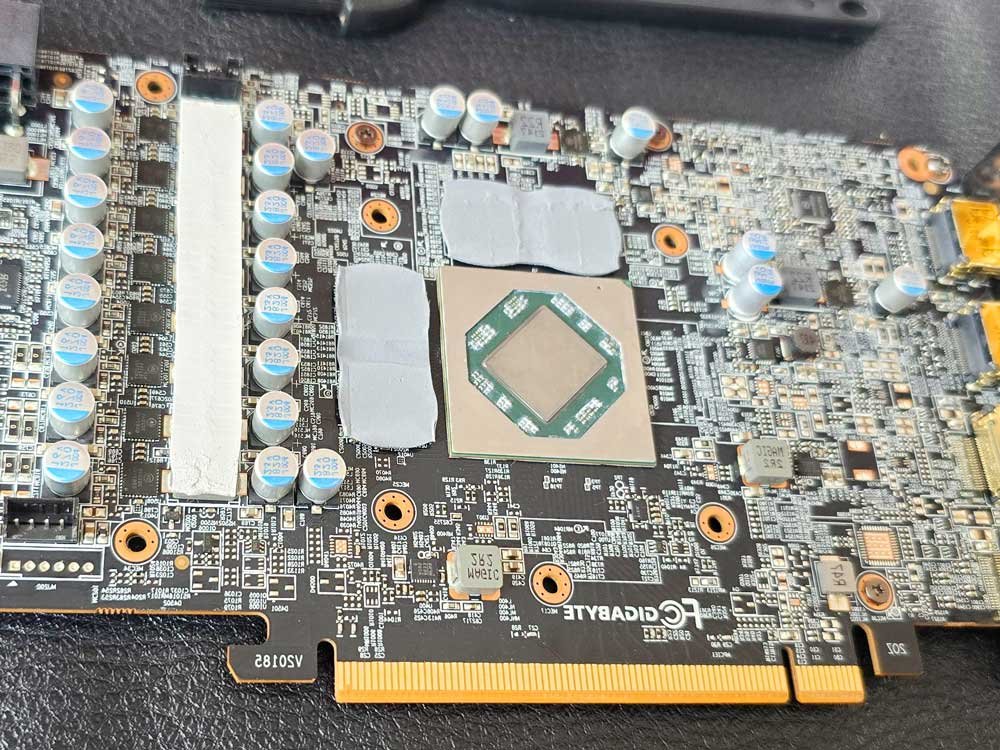
In thermal management for electronics, choosing the right interface material is critical for long-term reliability and heat dissipation efficiency. Thermal putty and thermal pads are both commonly used to bridge gaps between heat-generating components and heat sinks. However, when the gap exceeds 2mm, thermal putty often becomes less reliable, while thermal pads consistently deliver superior performance.
This article explains why thermal pads outperform thermal putty in large-gap applications, supported by material behavior, mechanical stability, and real-world use cases.
Understanding Thermal Putty and Thermal Pads
What Is Thermal Putty?
Thermal putty is a soft, moldable thermal interface material (TIM) designed to fill uneven surfaces and variable gaps. It is typically silicone-based and loaded with thermally conductive fillers.
Key characteristics:
- Extremely soft and conformable
- Easy manual application
- Good initial gap-filling capability
What Is a Thermal Pad?
A thermal pad is a pre-formed elastomeric sheet with a defined thickness, engineered to transfer heat while maintaining mechanical integrity.
Key characteristics:
- Controlled thickness (1mm–5mm+)
- Stable thermal conductivity
- Excellent long-term reliability
Why Thermal Putty Fails in Gaps Larger Than 2mm
1. Structural Instability and Material Migration
Thermal putty lacks internal reinforcement. Under:
- Gravity
- Vibration
- Thermal cycling
the material can flow, sag, or migrate, leading to:
- Uneven contact
- Voids in the thermal path
- Reduced heat transfer efficiency
This risk increases dramatically as gap thickness increases beyond 2mm.
2. Pump-Out Effect Under Thermal Cycling
In electronics, repeated heating and cooling cause expansion and contraction. Thermal putty is particularly prone to the pump-out effect, where material is slowly displaced from the interface.
Result: Over time, the thermal resistance increases and hotspot temperatures rise.
3. Inconsistent Thickness = Inconsistent Performance
Because thermal putty is applied manually:
- Thickness control is difficult
- Compression varies across the interface
For large gaps, this leads to uneven thermal resistance, making system thermal performance unpredictable.
Why Thermal Pads Are More Reliable Above 2mm
1. Defined Thickness and Mechanical Support
Thermal pads are manufactured with precise thickness tolerances, ensuring:
- Full surface contact
- Uniform compression
- Consistent thermal performance
Pads with thicknesses of 2mm, 3mm, 4mm, or even 5mm+ are specifically designed for large-gap applications.
2. Superior Long-Term Stability
High-quality thermal pads maintain:
- Shape integrity
- Compression resilience
- Thermal conductivity over time
They do not flow or migrate, even in:
- Vertical assemblies
- High-vibration environments
- Long service lifecycles
3. Predictable Thermal Conductivity
Thermal pads are rated with stable thermal conductivity values, typically ranging from:
0.5 W/m·K to 15 W/m·K
This predictability allows engineers to:
- Model thermal performance accurately
- Model thermal performance accurately
Thermal Pad vs Thermal Putty: Performance Comparison (Gaps > 2mm)
| Feature | Thermal Putty | Thermal Pad |
|---|---|---|
| Gap > 2mm | ❌ Unstable | ✅ Designed for it |
| Thickness control | Poor | Excellent |
| Pump-out resistance | Low | High |
| Long-term reliability | Limited | Excellent |
| Assembly consistency | Variable | Repeatable |
Recommended Applications for Thermal Pads (>2mm Gaps)
Thermal pads are the preferred solution in:
- GPU & CPU heat sinks
- Power modules & MOSFETs
- Telecom base stations
- LED lighting systems
- Industrial control electronics
In these applications, mechanical stability and long-term thermal performance are critical.
When Can Thermal Putty Still Be Used?
Thermal putty remains suitable for:
- Small gaps ≤ 1.5–2mm
- Irregular surfaces requiring extreme conformability
- Temporary or prototype applications
However, it should not be relied upon for large-gap, long-life designs.
Conclusion
While thermal putty offers flexibility and ease of application, it is not as reliable as thermal pads when the gap exceeds 2mm. For large-gap thermal interfaces, thermal pads provide superior mechanical stability, predictable performance, and long-term reliability, making them the preferred choice for professional electronic and industrial applications.
Choosing the right thermal interface material is not just about initial thermal conductivity—it’s about maintaining performance throughout the product’s entire lifespan.
Need help developing your thermal pad GPU or thermal interface material solutions? Contact Yousan today to start your custom project.
If you would like to learn more about Yousan adhesive tapes, please visit our website at www.ysdiecut.com