
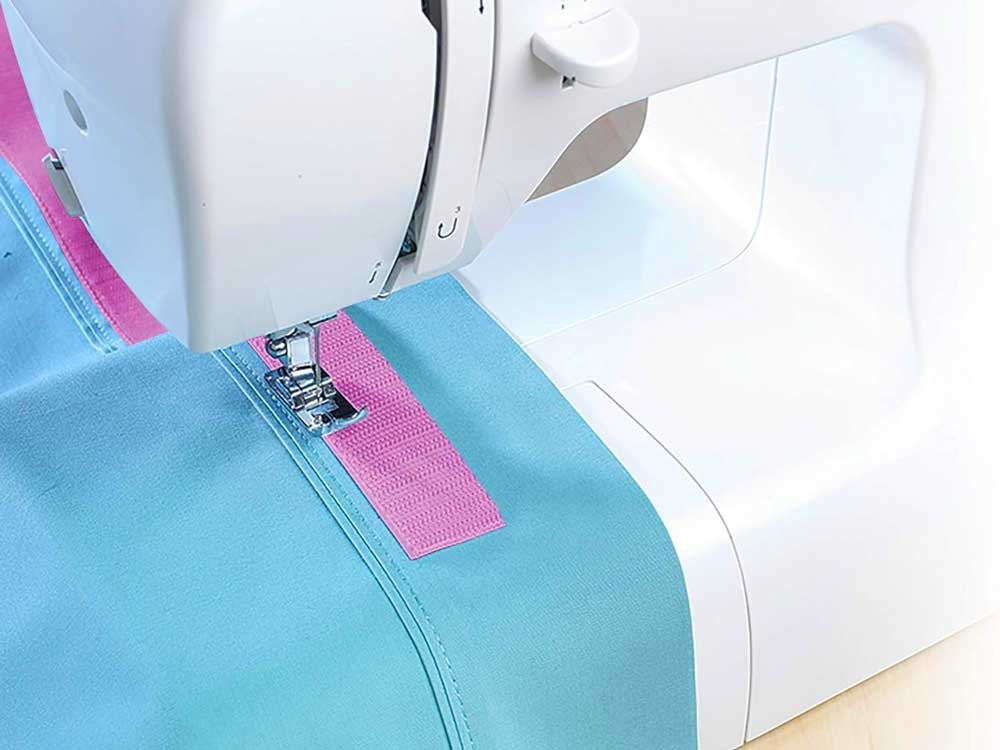
Hook and loop fasteners (commonly known as Velcro fasteners) are one of the most widely used functional accessories in modern apparel. Thanks to their adjustability, reusability, and ease of use, they are extensively applied in outdoor clothing, sportswear, workwear, children’s garments, and functional fashion.
This article provides a technical overview of hook and loop fasteners in clothing, covering working principles, garment applications, material selection, specifications, and practical usage guidelines.
1. Origin and Working Principle of Hook and Loop Fasteners
Hook and loop fasteners were invented in the mid-20th century by Swiss engineer George de Mestral, inspired by the tiny hooks found on burr seeds.
A standard hook and loop fastening system consists of:
- Hook side: stiff surface with tiny hooks
- Loop side: soft surface with dense loops
When pressed together, the hooks mechanically engage the loops, forming a secure yet detachable bond. High-quality nylon hook and loop fasteners can withstand thousands of open-and-close cycles, making them ideal for apparel applications where durability and comfort are critical.
2. Typical Applications of Hook and Loop in Garment Design
2.1 Cuff Adjustment Systems
In sleeve cuff designs, a common structure is:
- Hook side sewn onto the adjustment tab
- Loop side sewn onto the cuff body
This allows easy size adjustment while preventing exposed hooks from snagging other fabrics. It is widely used in outdoor jackets, uniforms, and protective clothing.
2.2 Pocket and Flap Closures
For garment pockets:
- Outer flap: loop side on the flap, hook side on the pocket body
- Inner pocket areas: loop side facing the skin for comfort
This design improves user experience and reduces skin irritation, making it suitable for functional wear, tactical clothing, and sports apparel.
2.3 Front Placket and Zipper Assistance
Placing the loop side near zippers helps:
- Reduce friction between cuffs and zippers
- Improve smoothness during wear and removal
This is a mature solution in technical and performance apparel.
2.4 Modular Design and Fashion Innovation
Using adhesive hook and loop tape or segmented hook and loop pieces, designers can achieve:
- Detachable components
- Modular garment structures
- Interchangeable decorations
These applications are increasingly popular in fast fashion, stage costumes, and customizable apparel.
3. Material Selection and Specification Recommendations
3.1 Material Options
Nylon hook and loop
- Soft hand feel
- Excellent durability
- Ideal for skin-contact garments and baby clothing
Polyester hook and loop
- Higher stiffness
- Lower cost
- Suitable for non-contact or industrial-style apparel
For premium garments, Grade-A nylon hook and loop tape is recommended.
3.2 Common Width Specifications
Typical width range for apparel: 10–150 mm
Common sizes include: 12.5 / 16 / 20 / 25 / 30 / 40 / 50 / 60 / 75 / 80 / 100 / 125 mm
Selection should consider load requirements, frequency of use, and aesthetic design.
3.3 Product Forms
Beyond standard sew-on hook and loop tape, apparel designers may also use:
- Back-to-back hook and loop tape
- Hook and loop cable ties
- Self-adhesive hook and loop fasteners
These forms expand structural flexibility and functionality.
4. Practical Usage and Maintenance Guidelines
4.1 Proper Opening Technique
Always peel hook and loop fasteners along the direction of force, not sideways, to reduce hook deformation and extend service life.
4.2 Cleaning and Storage
- Keep hook and loop surfaces clean and free of dust or lint
- Store in dry conditions away from heat and chemicals
4.3 Washing Recommendations
- Fasten hook and loop before machine washing
- Avoid aggressive detergents
- Minimize strong mechanical agitation
These steps help maintain adhesion strength and durability.
4.4 Adhesive Hook and Loop in Apparel
When using self-adhesive hook and loop tape:
- Ensure the surface is clean, smooth, and oil-free
- Apply uniform pressure after placement
- Match adhesive type to fabric and temperature conditions
- Reinforce with stitching for long-term or high-stress use
5. Conclusion: Why Hook and Loop Is Essential in Modern Apparel
With proper structural design, material selection, and usage techniques, hook and loop fasteners significantly enhance garment functionality, comfort, and durability. They remain an essential component in technical clothing, functional fashion, and performance apparel.
High-quality hook and loop fasteners enable designers and manufacturers to balance strength, comfort, flexibility, and long service life in modern clothing systems.